It started with a simple essay written by the student. The course teacher noticed something was off, not wrong exactly, but too right.
In fact, it was too smooth and safe. Every counted sentence landed perfectly. No crossed-out ideas, no half-formed thoughts, no personality.
Just clean, confident paragraphs that said absolutely nothing real.
That teacher stared at the screen for a long time. Then, she opened a new tab and started searching about how do teachers detect AI writing.
To be honest, that story is playing out in classrooms all over the world right now. Maybe you are the teacher in it. Maybe you are the student.
Either way, you ended up here, which means you already know something important is changing in education, and you want to understand exactly how it works.
So here is the situation in plain terms. ChatGPT launched in late 2022. Within months, students everywhere discovered they could type a prompt and get a finished essay back in thirty seconds.
No research, no drafts, no late nights with a highlighter and a cold coffee.
Just paste and submit!
For a while, it worked. Teachers had no idea. The writing looked fine. Sometimes it looked better than fine.
But then teachers started paying closer attention. They noticed the high-quality essays all sounded the same. They noticed students could not explain what they had written.
Teachers even noticed phrases like "it is worth noting" and "in today's multifaceted world" showing up in papers written by 14-year-olds.
Something was wrong, and they knew it. Unfortunately, they just did not have the tools to prove it yet.
Now they do. And that changes everything.
You handed in your essay. Now you are nervous. Can your teacher really tell if AI wrote it? The short answer: yes and no.
It depends on how the teacher checks, which tools they use, and how well you covered your tracks. But don’t worry, as this guide is going to tell you everything.
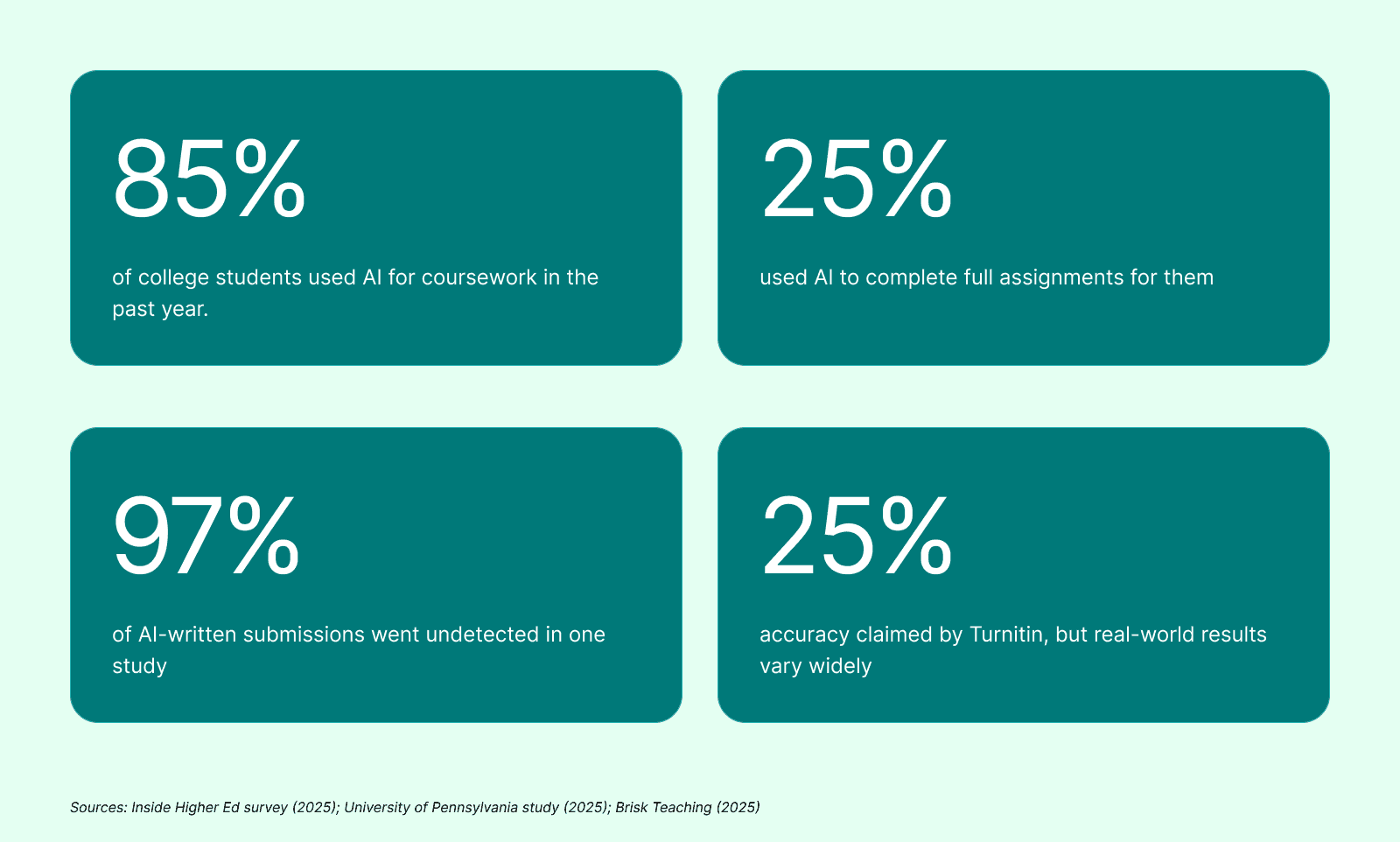
You can see that the rise of ChatGPT, Gemini, and other AI writing tools has completely changed how students do homework and how teachers check it.
According to Inside Higher Ed, 85% of college students have used generative AI for coursework in the past year. This indicates that one in four admitted to having AI complete their assignments entirely.
That teachers already noticed. Now they are fighting back with a growing toolkit from AI detector software to clever classroom strategies. So, how do teachers detect AI writing exactly?
Let us walk through every method, step by step.
Why Teachers Care About AI Writing in 2026
Before we talk about detection, it helps to understand why teachers care so much. Honestly, it is not just about catching cheaters or AI writers as plagiarism might occur via AI. The concern runs deeper than that, so let’s know about it -
Learning is the goal
Writing an essay teaches research, thinking, and communication skills. AI skips all of that for the student.
Fairness to others
Students who write their own work deserve fair grading against those who use AI shortcuts.
Academic integrity
Most schools treat AI-generated writing as a form of plagiarism or academic dishonesty.
Preparing for real life
Real-world jobs still need human thinking, judgment, and genuine communication skills.
The AI isn't capable of creating thoughts, making conclusions, or asking original, thought-provoking questions. It's all been sourced from different places across the web.
— Microsoft, on the risks of AI-generated essays
The Signs Teachers Need to Look For First
Before even opening a detection app, many experienced teachers do a simple read-through. There are specific patterns in AI writing that stand out to a trained eye.
Here is what they look for and why these signs matter when teachers try to detect AI-generated writing:
Too Perfect and Fast
If a student who usually writes rough, honest work suddenly submits a flawless 1,000-word essay with zero errors, that raises a red flag right away. This is one of the first things teachers notice when they check for AI writing.
Flat and Emotionless Tone
AI writing sounds very "neutral." There is no personality, no humor, no voice. Real student writing has a feel to it.
Generic Examples
Artificial Intelligence usually provides broad, textbook-style examples. On the other hand, students give specific ones from their own life, class discussions, or local news.
Missing the Actual Assignment
AI sometimes answers a general version of the question rather than the specific prompt given in class. A student who was actually there would know the difference.
Unusual Vocabulary Jumps
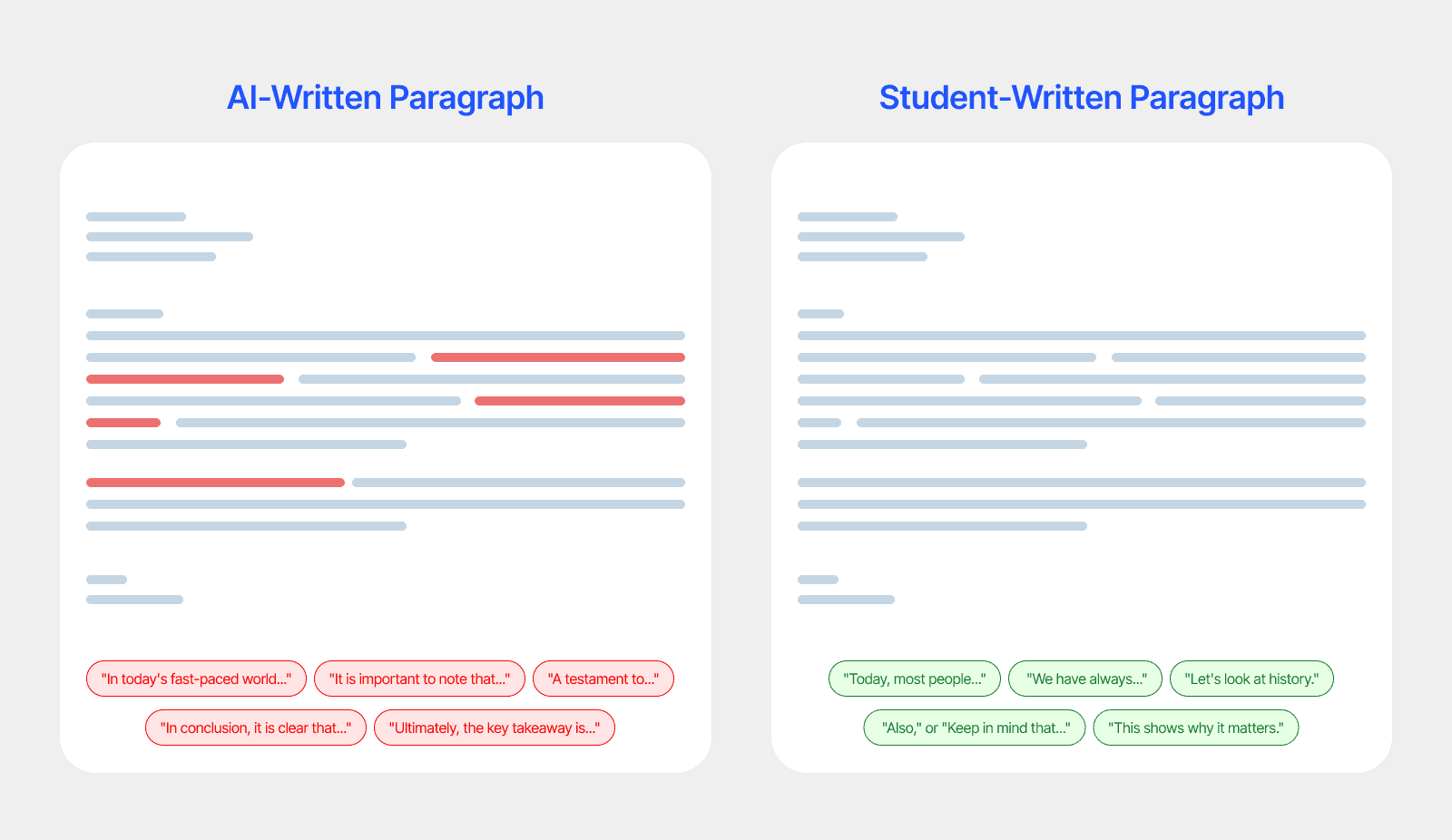
An 8th grader does not naturally write "henceforth," "multifaceted," or "it is worth noting." AI loves these filler phrases, and so do AI detectors for teachers looking for them.
Repetitive Sentence Structure
AI tends to open paragraphs the same way over and over again; that's why it's better to go for a reliable paragraph counter so repetition doesn't occur. It also loves to start with "In conclusion" or "It is important to note."
No Wrong Answers or Uncertainty
Real students are wrong sometimes. They say "I think" or "maybe." AI almost never expresses uncertainty.
Hallucinated Facts or Fake Citations
AI sometimes invents statistics, fake studies, or non-existent book titles. A teacher who knows the subject will spot this immediately.
What AI Detector Tools Do Teachers Use?
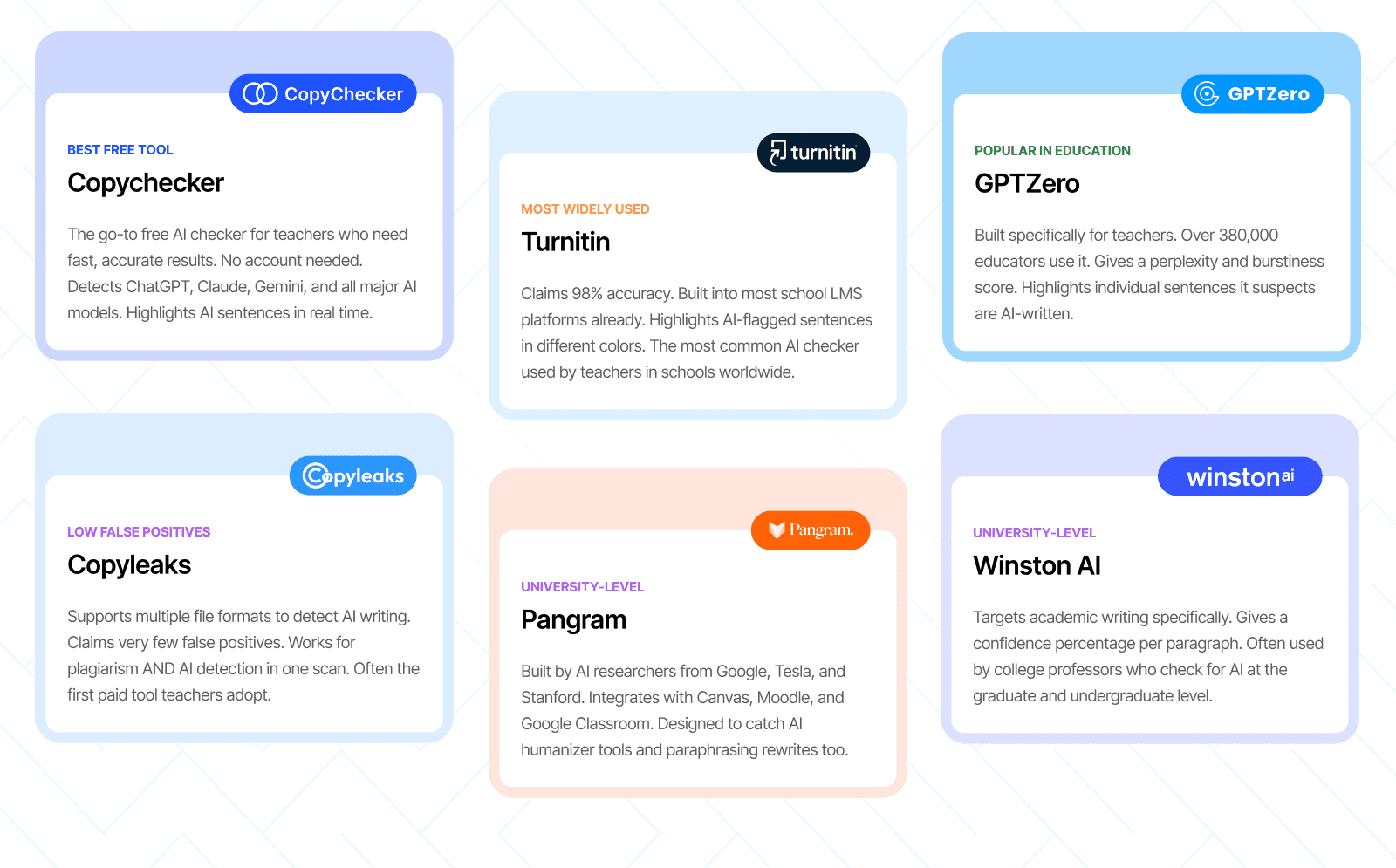
This is the big question most students Google: what AI detector do teachers use? There are several popular tools that schools have adopted.
Some are paid platforms built into school systems. Others are free AI checkers for teachers built with plagiarism checkers or other writing tools for those who just need a quick scan.
So, here is a breakdown of the most common ones, with the tool that is rising fast:
How These AI Detectors Actually Work
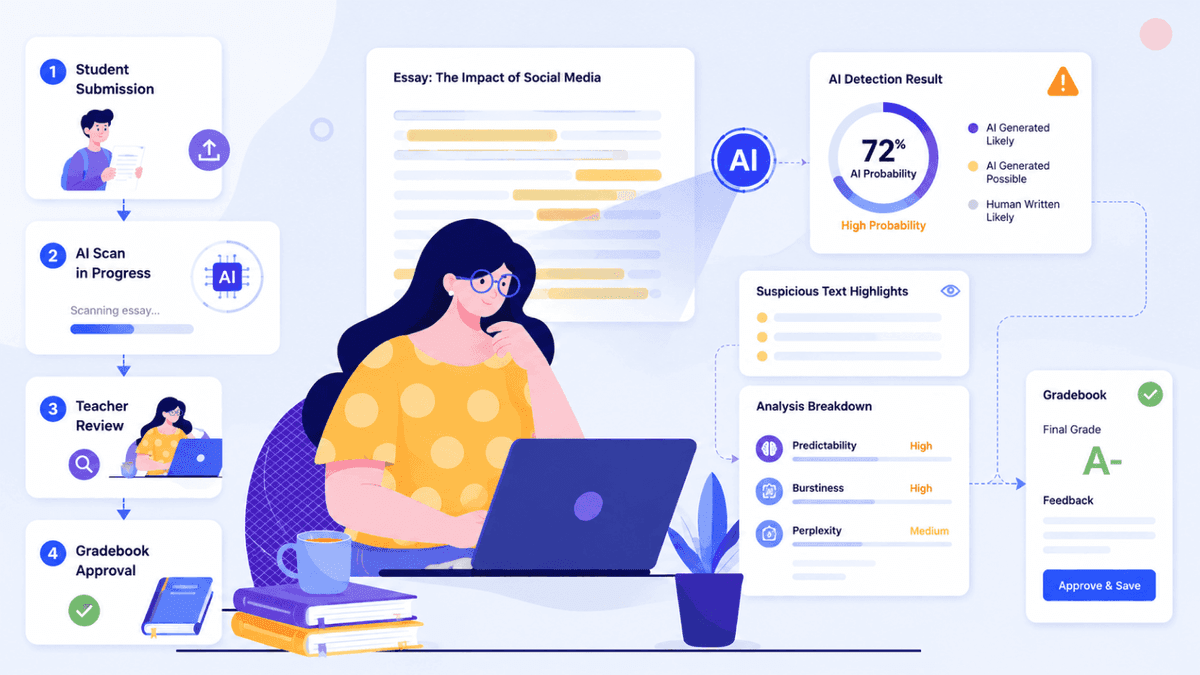
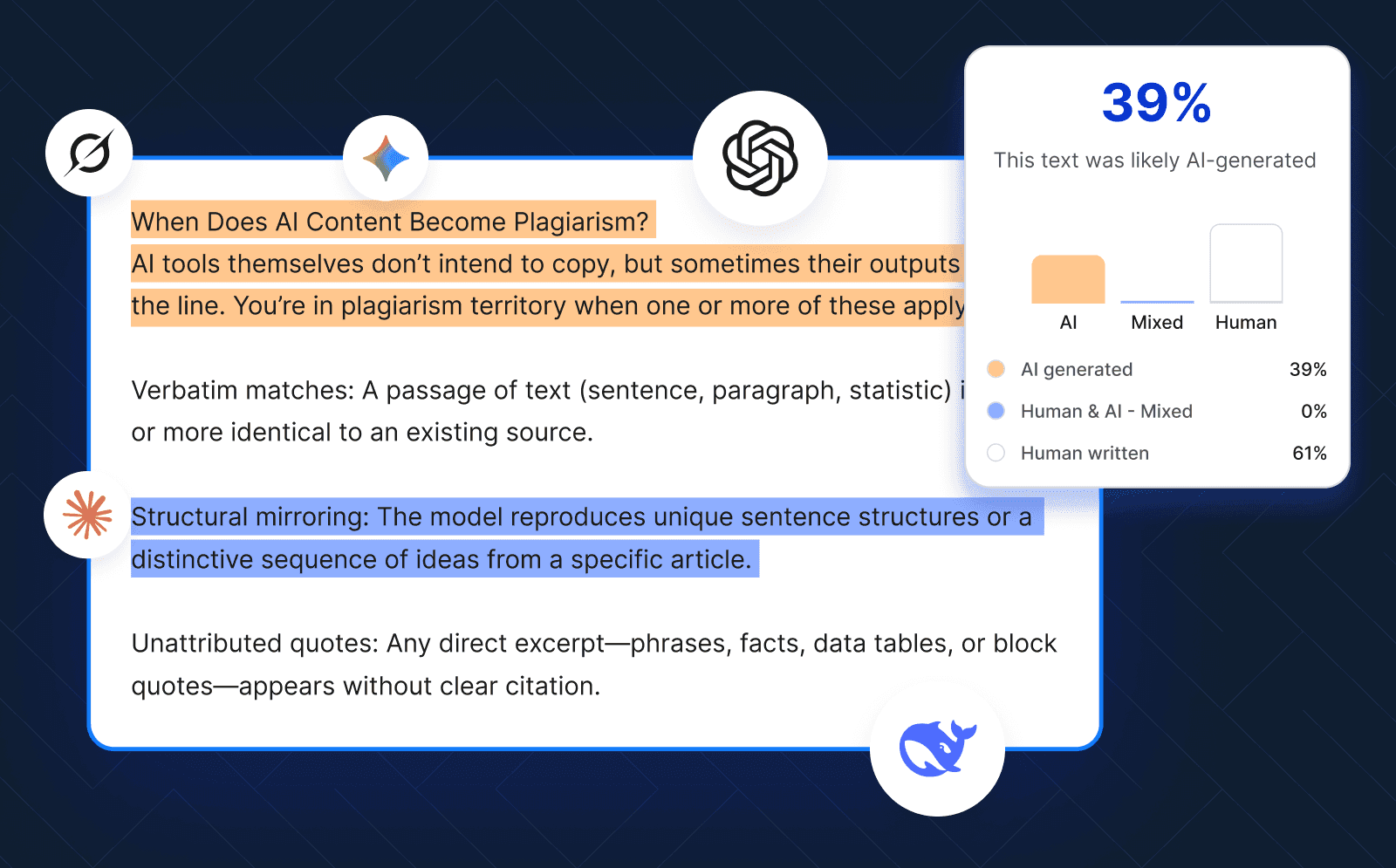
Wondering how to detect AI writing from a technical side? Every AI detector for teachers, whether it is CopyChecker, Turnitin, or GPTZero, analyzes a few key signals in the text.
So let’s know more about how does AI detectors usually function to give you the visible results from the following -
Perplexity
How predictable is the text? Human writing jumps around in interesting, unpredictable ways. AI writing is very smooth because it always picks the most "likely" next word.
Burstiness
Human writers mix short, punchy sentences with long, complex ones. Whereas AI writes sentences that are all about the same length, mostly very even and very flat.
Token probability patterns
AI models generate text by predicting probable word sequences. That's why AI detector tools reverse-engineer this to spot those statistical fingerprints.
Style consistency
If your intro sounds like a nervous student and your conclusion sounds like a TED Talk, that inconsistency gets flagged immediately.
How Teachers Detect AI Writing Without Any Tools
Not every teacher has a paid subscription. Many rely on their own experience, gut instinct, and clever classroom strategies. This is "manual detection," and for a teacher who knows their students well, it can work surprisingly well.
Here is how teachers detect AI in writing using only their eyes and their experience:
The "Prove It" Conversation
A teacher calls a student in and asks, "Walk me through your argument in paragraph three. Where did you find that statistic? What does it mean?"
A student who genuinely wrote the essay will explain it naturally. A student who copies and pastes from ChatGPT will struggle to defend ideas they do not actually understand.
This is the fastest way for teachers to know if you used AI, and no software is needed.
Comparing to Past Work
This is one of the most powerful methods. Teachers who have read 20 essays from the same student over a semester know that student's voice, vocabulary, and thinking style.
If your new essay suddenly sounds like it was written by a different person entirely, they will notice immediately.
How can teachers detect AI writing without tools? By knowing you.
The In-Class Follow-Up
Some teachers, especially at the college level, ask students to write a short in-class paragraph on the same topic as their take-home essay.
The two personal statement samples are compared side by side. Big differences in quality or style are a major warning sign. How do professors check for AI? This is one of their best tricks.
Checking the Research
AI regularly invents fake citations, fake study authors, and false statistics. That is why a quick Google search by the teacher can expose fabricated sources in seconds.
This is called "hallucination" in AI; the model makes things up that sound plausible but are not real.
Running It Through AI Themselves
Some teachers paste the submitted essay into a free AI detector, such as CopyChecker, and get an instant score. Others ask ChatGPT directly for a source if the essay sounds AI-generated.
Either way, it gives useful supporting evidence alongside their own reading of the work. This is how teachers check for AI in writing, the quick and modern way.

The Honest Truth About If AI Detector is Perfect or Not
Here is something that does not get said enough: AI plagiarism detection tools make mistakes, in fact, a lot of them. It is important for both teachers and students to understand this before any accusations are made.
The False Positive Problem
A "false positive" means the tool says something is AI-written when a real human wrote every word. This happens more than you might think.
Studies show that real-world accuracy often falls well below 80%, meaning at least 1 in 5 decisions could be wrong. That is a serious problem when someone's grade or reputation is on the line.

Who Gets Affected Most by False Positives in Academic Areas?
Research from Brisk Teaching shows that students who are still learning English are especially at risk of false positives.
When non-native English speakers use grammar checker tools to improve writing, the polished result can look more "AI-like" to a detector, even when they wrote every word themselves.
This is a real fairness issue in schools today and a key reason why teachers need to use AI detectors as one tool among many, not as the final word.
AI Humanizer Tools Are a Moving Target
Students have discovered tools that basically rewrite AI-generated text, known as AI humanizer, which is used to sound more human.
This creates a constant back-and-forth: detectors improve, humanizers improve, detectors improve again. It is an arms race, and there is no clear winner right now.
But tools like CopyChecker keep their detection models up to date to stay ahead, so you know what you need to do.
Honest Advice for Students and Teachers on AI Writing
So here we are. You know the tools. You know the signs. You know that no detection system, no matter how advanced it is, can be perfect.
But here is the part most guides skip entirely. What should you actually do about all of this? Whether you are a student staring at a blank page at midnight or a teacher drowning in a stack of submissions, the answer is not as simple as "just do not use AI."
The real answer lives somewhere more honest than that, and that is exactly where this section goes.
For Students Worried about Being Wrongly Accused:
False positives are real, and they are not your fault. If a detector flags your work unfairly, the worst thing you can do is have nothing to show for your process.
The best thing you can do is be prepared before submission day, not after. Here is exactly how to do that.
- Keep your drafts, notes, and research browser history as proof of your writing process. These are your best defense.
- Write in your own voice. Try to use contractions, opinions, and personal examples that AI never would include.
- If you use AI only for brainstorming or grammar rules checking, be upfront with your teacher about it before they ask.
- Run your own essay through CopyChecker's free AI detector before you submit, so you know what score your teacher's AI detector will likely see.
- Ask your school about its AI use policy. Rules vary wildly from school to school right now, and many are still being written.
For Teachers Building A Smart Detection Strategy:
Detection is not the goal. Learning is. The best strategy a teacher can build is one that makes AI shortcuts less appealing in the first place and catches them fairly when they still happen.
That means combining smart tools with smarter assignment design, and always leading with curiosity before conclusions. Here is how to build exactly that.
- Never make an accusation based on a software score alone. Always combine tool results with the student's personal knowledge.
- Use process-based assignments: drafts, outlines, and revision history in Google Docs for checking real work over time.
- Build in-class writing components, so you have a natural baseline sample to compare against the take-home work.
- Teach students why writing matters, not just how to avoid getting caught. Cultural change outlasts enforcement every time.
- Use a reliable, free AI detector like CopyChecker as part of your routine. It takes 30 seconds and gives you a clear picture before you even open the essay.

FAQs About How Do Teachers Detect AI Writing
Short and honest answers to the questions that teachers as well as students search for most, so let’s check them out -
How do teachers detect AI writing?
Teachers use a mix of AI detection software (like CopyChecker, Turnitin, or GPTZero) and manual reading strategies. They look for an unnatural tone, a lack of personal voice, fake citations, and sudden jumps in writing quality compared to a student's previous work.
Can teachers tell if you use AI to write your essay?
Often yes, especially if they know your writing style well. Experienced teachers spot AI-generated writing through flat tone, generic examples, and suspiciously perfect grammar. Detection tools give them a second layer of evidence, though not a final verdict on their own.
What AI detector do teachers use most?
Turnitin is the most widely used because it is already built into most school LMS platforms. CopyChecker is a popular free option for fast individual checks, as it offers both an AI detector and a plagiarism checker at the same time. GPTZero is the most popular standalone tool among educators, used by over 380,000 teachers worldwide.
Is there a free AI checker for teachers?
Yes. CopyChecker is one of the best free AI detectors for teachers available right now. It requires no sign-up, delivers instant results, and clearly highlights AI-flagged sentences. GPTZero and Copyleaks also offer free tiers for educators.
How do professors check for AI at the college level?
College professors often go beyond software. They may ask students to defend their essays verbally, require in-class writing samples for comparison, or assign follow-up questions that draw on personal knowledge of class discussions that an AI could never have.
How accurate are AI writing detectors?
Accuracy varies widely. Tools claim 90–98% accuracy in controlled tests, but real-world performance often falls below 80%. False positives are a significant problem, especially for non-native English speakers whose polished writing can resemble AI output.
Can teachers detect AI writing if I paraphrase it?
It becomes harder, but not impossible. Newer tools like Pangram are built to catch AI humanizers and paraphrasing rewrites specifically. And a teacher who knows your writing style will still notice the writing does not sound like you, even if the detector misses it.
How do teachers know you used AI if you edited the output heavily?
Heavy editing significantly reduces detection scores. However, if the core ideas, structure, and examples are still AI-generated, some tools will still flag it. A verbal follow-up from the teacher can also expose gaps in genuine understanding that no amount of editing can hide.
How can I check my own writing for AI before submitting it?
Use CopyChecker's free AI detector before you hand anything in. It tells you what score your teacher's tool might see. You can even try out their other writing tools such as proofreading, text summarizer, sentence rewriter, comma splice checker, and more.
Is using AI for writing always considered cheating?
It depends entirely on your school's policy. Some schools allow AI for brainstorming or grammar help, but not for generating final text. Others ban it completely. Some schools are still drafting their rules. Always check your institution's AI use policy before using any AI tool for academic work.
Final Thoughts on How Do Teachers Detect AI Writing
Let us be real for a second. The question of how teachers detect AI writing no longer has a single, simple answer, and it probably never will.
Detection is getting smarter. AI is getting smarter, too.
The gap between the two keeps shifting, and nobody has fully "solved" it yet. But here is the bigger picture that gets lost in all the noise:
- For All Teachers: The goal is learning, so the best thing you can do is build a classroom where authentic thinking is valued, where writing is taught as a process, and where students actually want to share their real voice. Use detection tools wisely, never as a weapon.
- For All Students: Your voice genuinely matters. A perfectly polished AI essay means nothing if it doesn't stick with teachers. The ones they remember years later are the messy, honest, surprising, or even passive voice ones that only you could have written. No AI can replicate that.
Still, we live in the real world, and it's complicated. Maybe you are a student who genuinely wrote every word, and now you are nervous your essay will get flagged anyway.
Maybe you are a teacher who just wants a fast, no-nonsense tool to help you sort through 60 submissions before Monday. Either way, the smartest move is the same: check before drawing conclusions.
That is exactly the gap CopyChecker's AI Detector was built to fill. It is not here to punish anyone. It is here to give you clarity faster and without the guesswork.
Paste any text, and within seconds, you get a sentence-by-sentence breakdown of what reads as human and what raises flags.

Whether you are double-checking your own work before hitting submit, or doing a first pass on a stack of student essays before a deeper read, CopyChecker puts the answer right in front of you in under a minute.
That is exactly the kind of tool that belongs in every classroom in 2026.