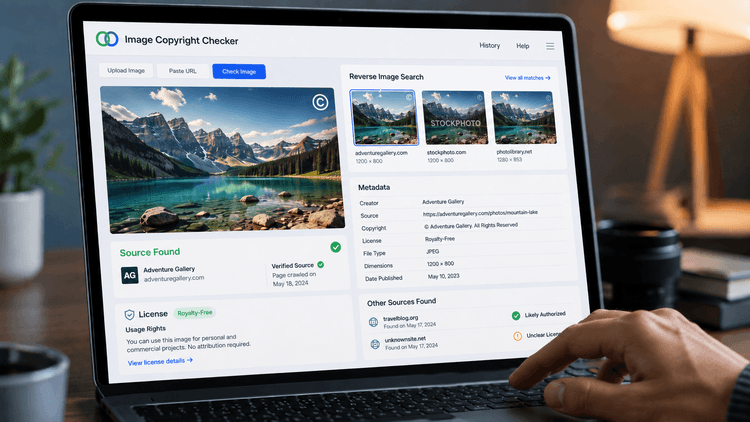

Pinterest is an inspiration hub where you can browse, share, and save ideas. From fashion and food to home decor, travel, art, and health, Pinterest is full of beautiful images and creative ideas waiting to be discovered. It offers a vibrant space for you to explore your interests and fuel your creativity.
Finding inspiration on Pinterest is easier and more fun with reverse image search. In this guide, you’ll learn how to use reverse image search on Pinterest. Follow our simple steps to quickly find similar images and uncover endless inspiration.
Reverse Image Search on Pinterest: What It Actually Does
Pinterest gives you several ways to search using an image rather than relying only on keywords.
Pinterest Visual Search
Open a Pin and select a specific object or area within the image. Pinterest then shows related or visually similar Pins based on what you selected.
Pinterest Lens
Lens lets you search Pinterest using a photo. You can take a new picture with your phone's camera or choose an existing image and use it to discover related ideas and Pins.
These features are especially useful when you see something you like but don't know exactly how to describe it. A particular chair, outfit, dish, plant, or piece of decor can become the starting point for a new visual search.
Pinterest's image search tools are particularly useful for discovering related content and ideas on its own site.
But if your goal is to investigate where an image appears elsewhere online or trace its source, you need a broader reverse image search tool. It allows you to search multiple search engines from one convenient place.
What Pinterest Image Search Can't Always Tell You
Pinterest Visual Search and Lens are excellent discovery tools, but finding similar Pins is not the same thing as establishing where an image originally came from.
A Pin may link to an external website, but that linked page is not necessarily the first place the image was published or the person who originally created it.
Pinterest's built-in search also isn't designed to investigate every appearance of an image across unrelated websites and platforms.
This matters when you're trying to:
- trace a possible original or earlier source
- identify the creator of artwork or photography
- see where the same image appears elsewhere online
- investigate possible reposts or duplicates
- learn more about an image before reusing or sharing it
If you're specifically trying to identify an image's creator, our guide on how to find the original artist of an image explains the process in more detail.
How to Reverse Search on Pinterest
Pinterest makes it easy to explore visually similar Pins. The exact interface can change over time or vary slightly by device, but the basic process is straightforward.
Here’s a step-by-step guide on how you can reverse image search on Pinterest:
On a Computer
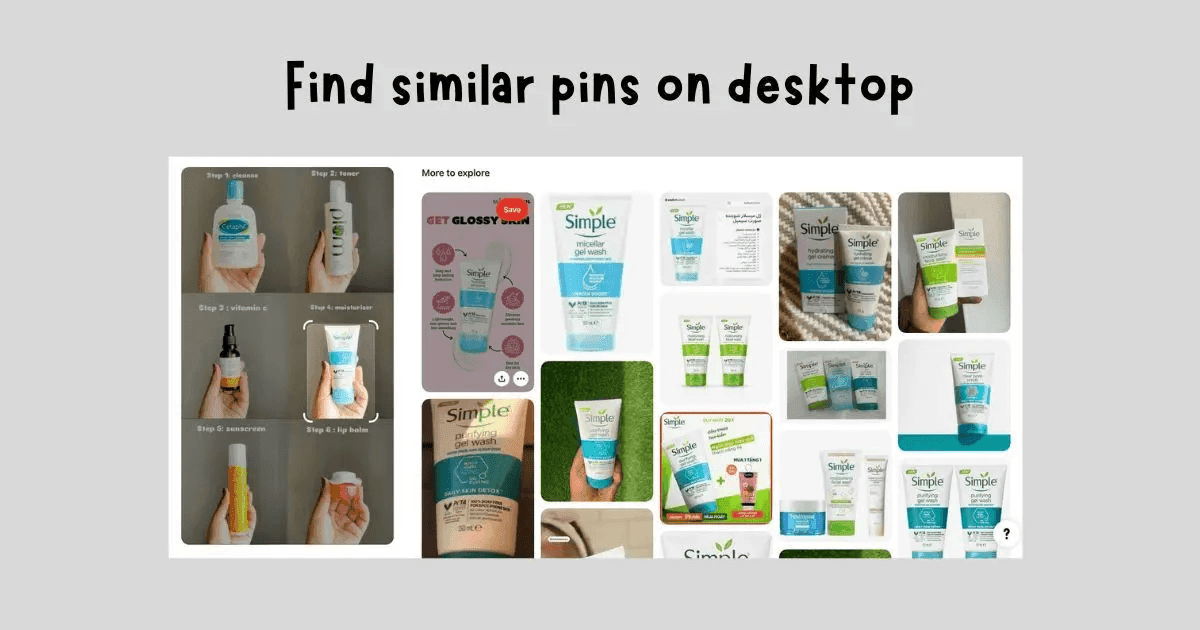
Step 1. Open a Pin
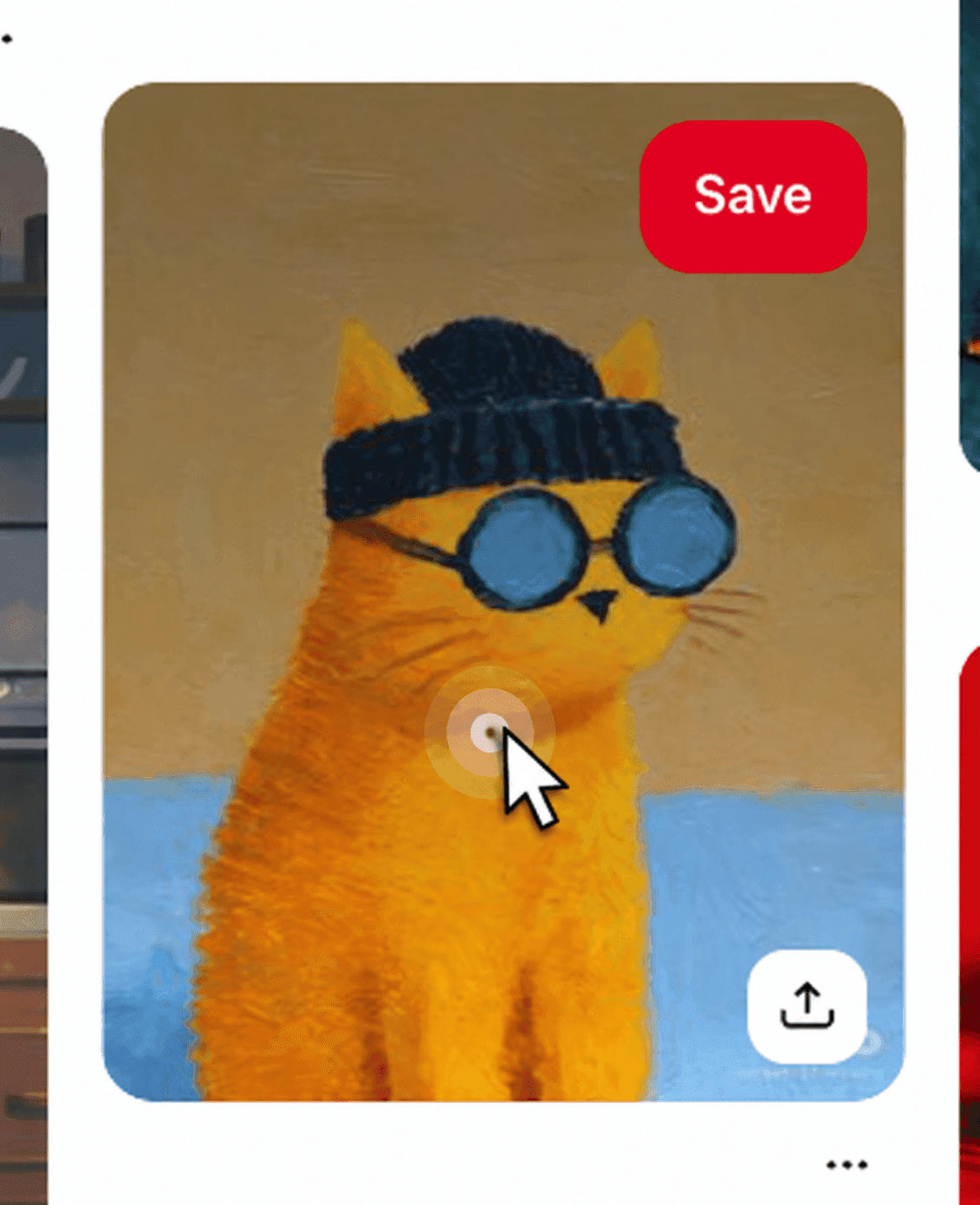
Click the Pin you want to investigate so it opens in a close-up view.
Step 2. Open Visual Search
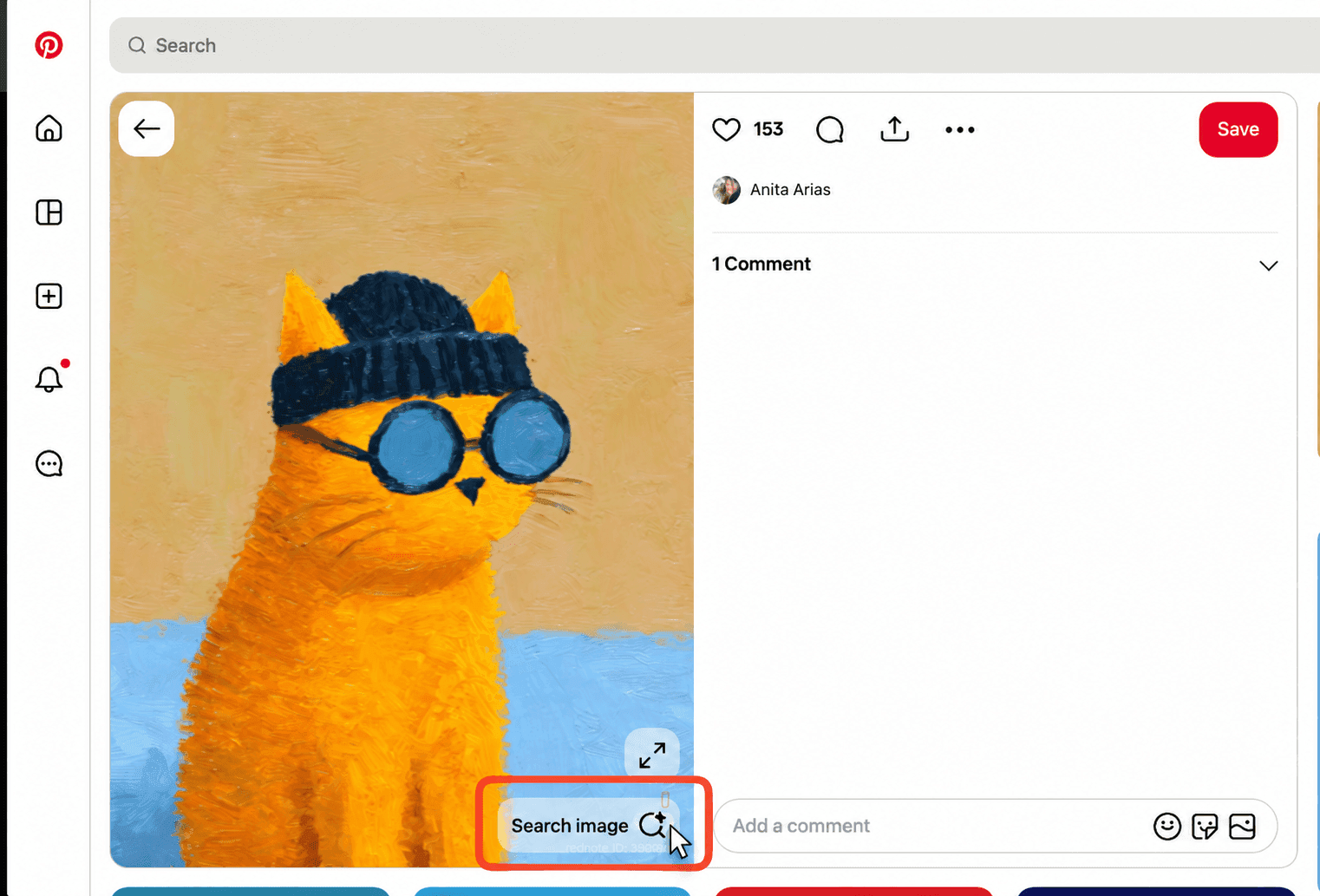
Look for Pinterest's visual-search or magnifying-glass icon on the image and click it. On a desktop, it’s floating on the lower part of the image.
Step 3. Browse Similar Results
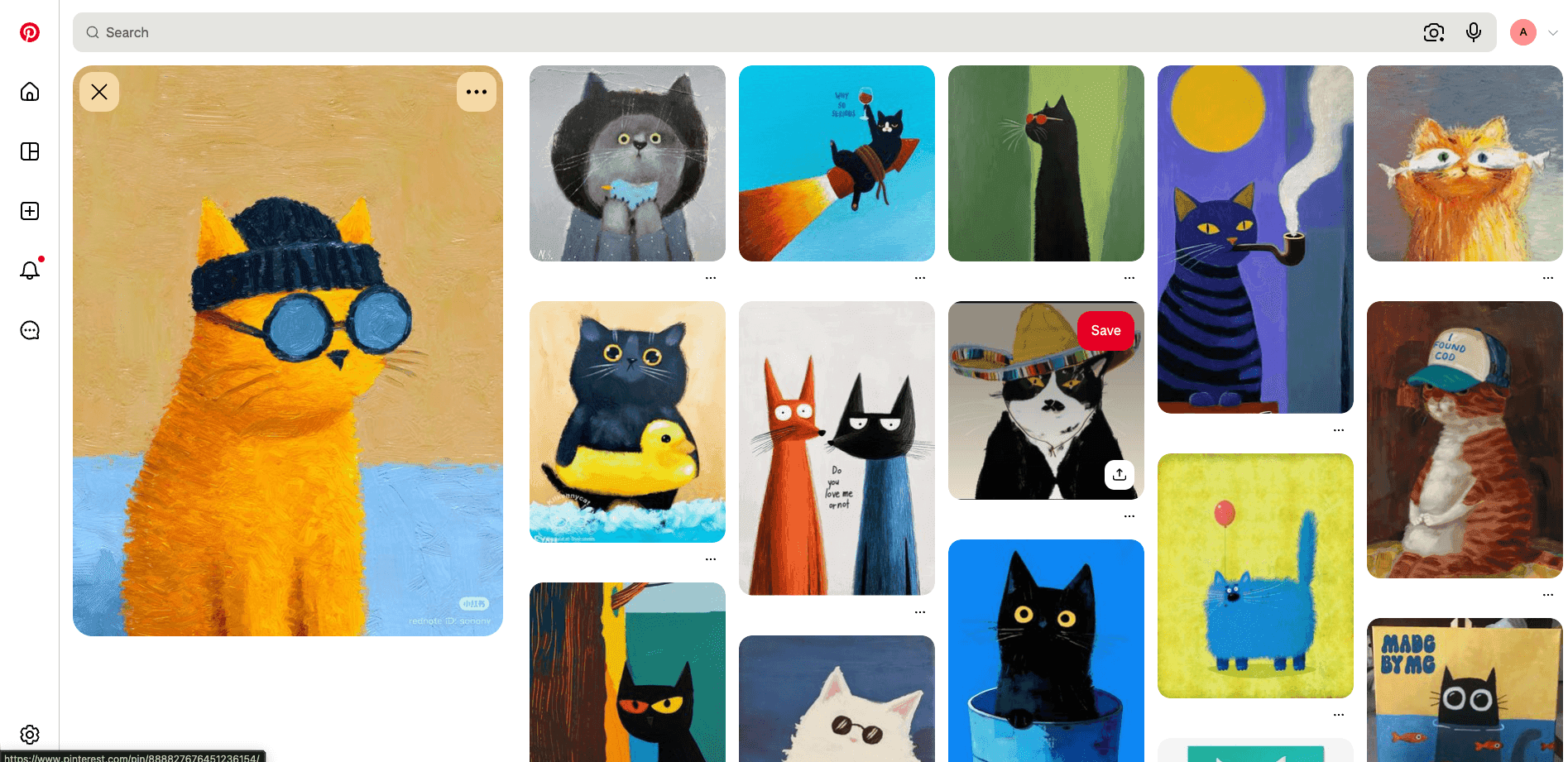
Pinterest will display visually related or, where available, shoppable Pins based on the selected part of the image.
Step 4. Search Specific Parts of An Image
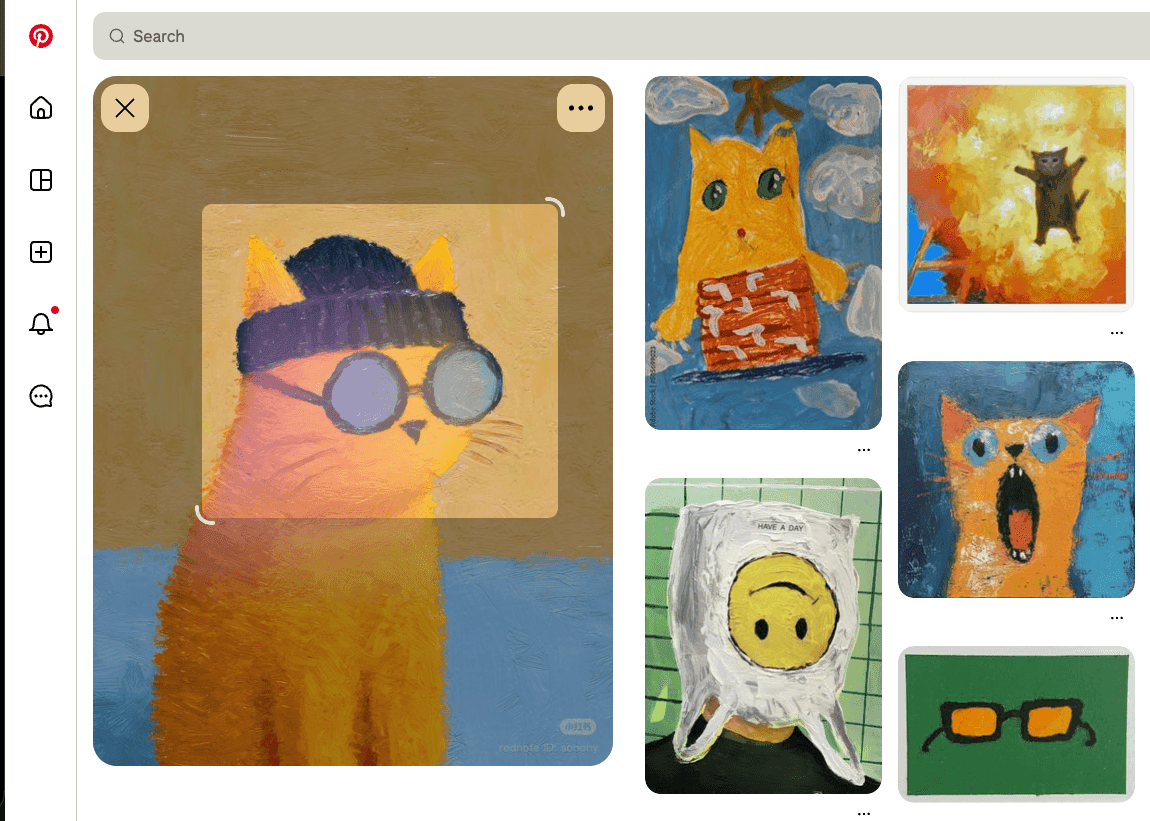
For more granular control, you can select specific areas of the image. This is particularly useful when a Pin contains several different items.
5. Check the Linked Page
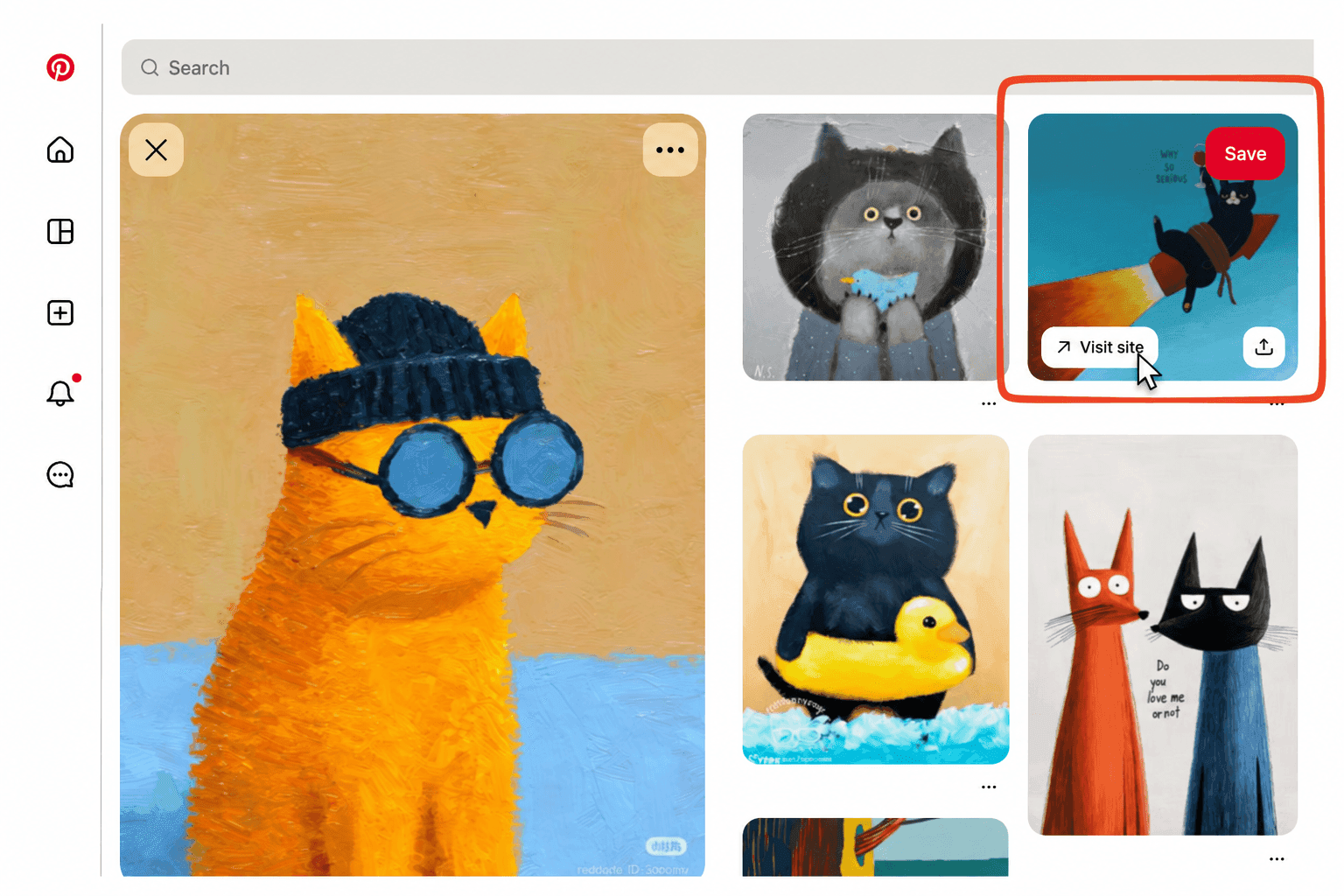
If a relevant Pin contains a Visit option, you can open the external page associated with that Pin for more information.
Tip: Selecting a smaller area of the image is useful for when you’re interested in one particular product or object rather than the entire image.
On a Mobile Device
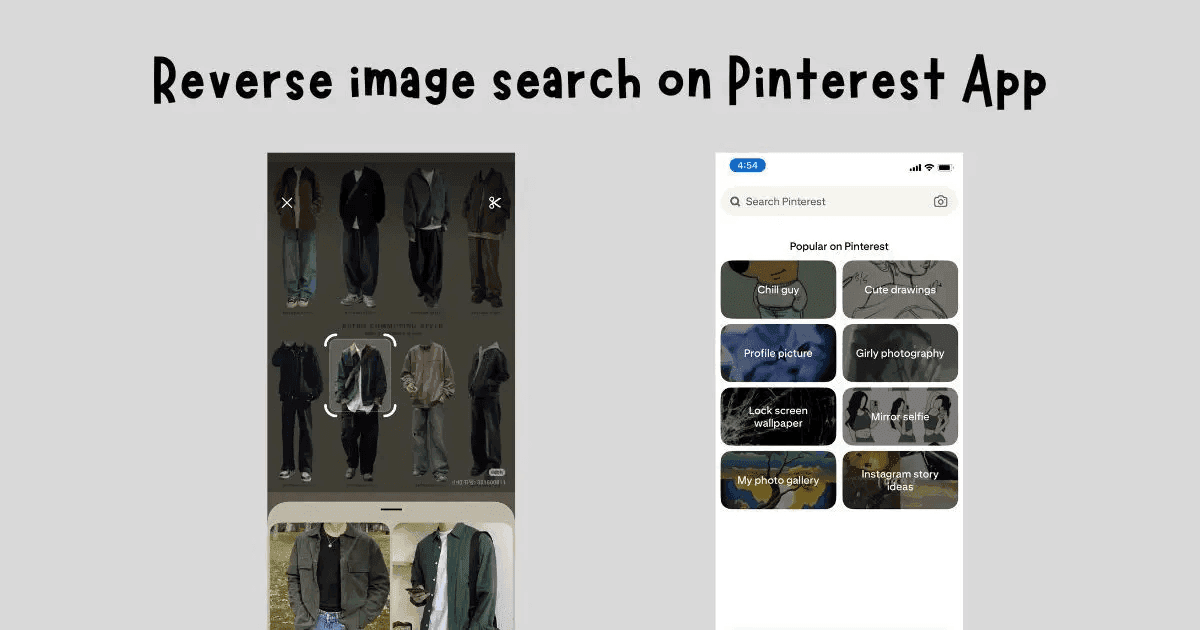
Pinterest also provides visual-search features through its mobile app.
Step 1. Open a Pin
This one’s pretty simple. Tap the Pin you want to image search. Then move on to the next step.
Step 2. Use Visual Search
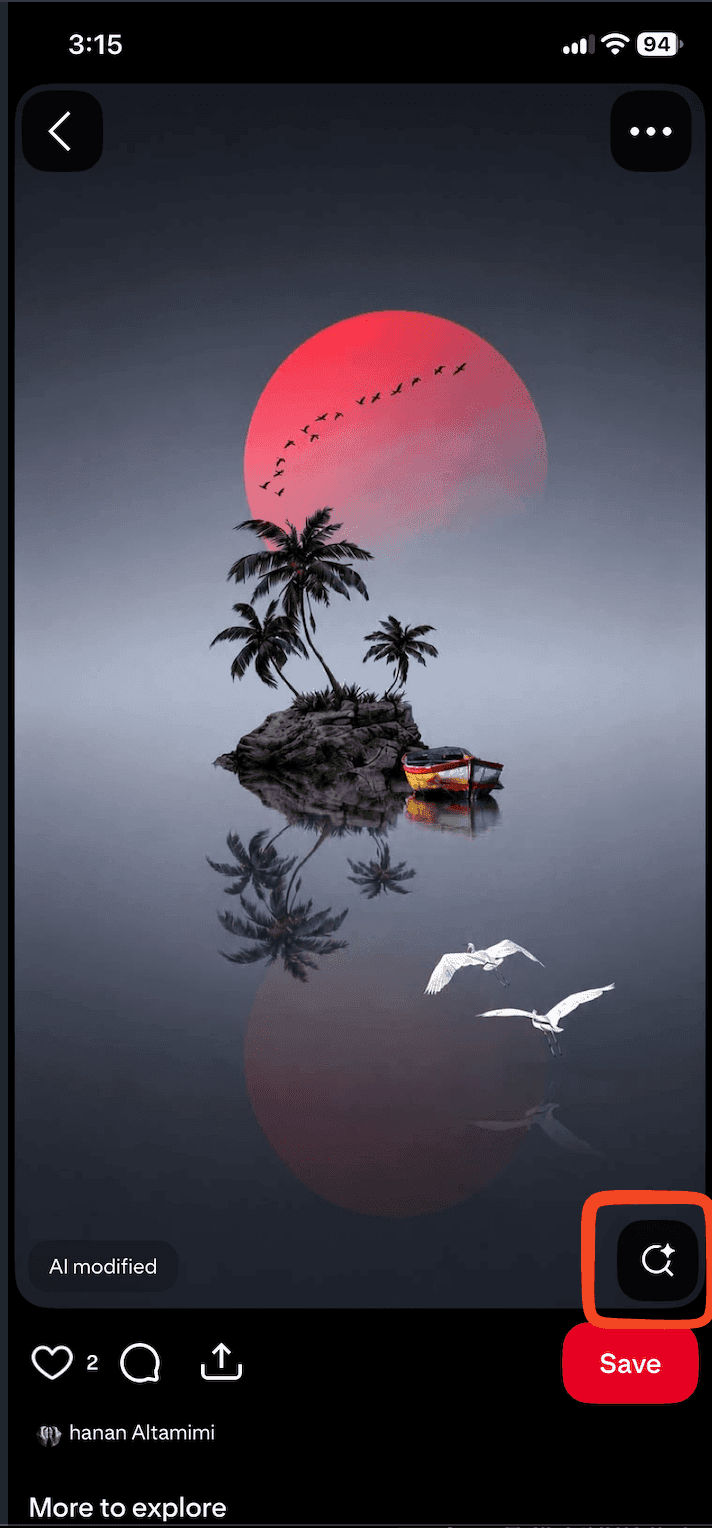
Click on the image search icon to use the visual-search feature and select or zoom in on the particular item or area that interests you.
Step 3. Explore Similar Pins
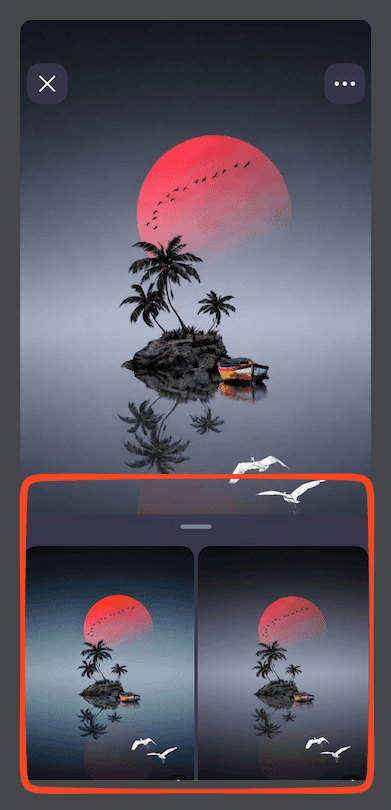
Pinterest will show similar image results on an overlay over the image you searched.
Step 4: Select Specific Areas
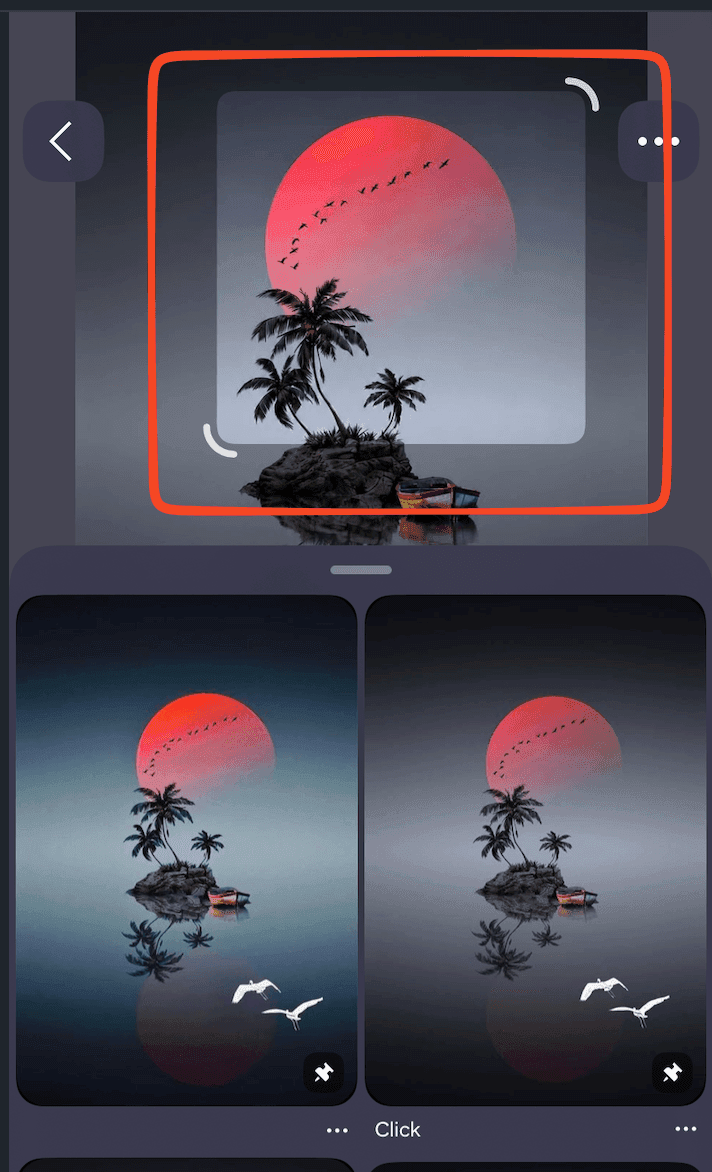
Similarly, on the desktop, you can also search for a specific area of the image.
Tap on the image, and a cropper will pop up like in the image example above, and then place it on the part of the image you want to search/
Search With Pinterest Lens
Pinterest Lens gives you another option when the image isn't already a Pin. It’s particularly useful when you want to search something right in front of you.
Step 1. Open Pinterest Search
Open the Pinterest app and go to the search area.
Step 2. Tap the Camera Icon
This opens Pinterest Lens.
Step 3. Take or Upload a Photo
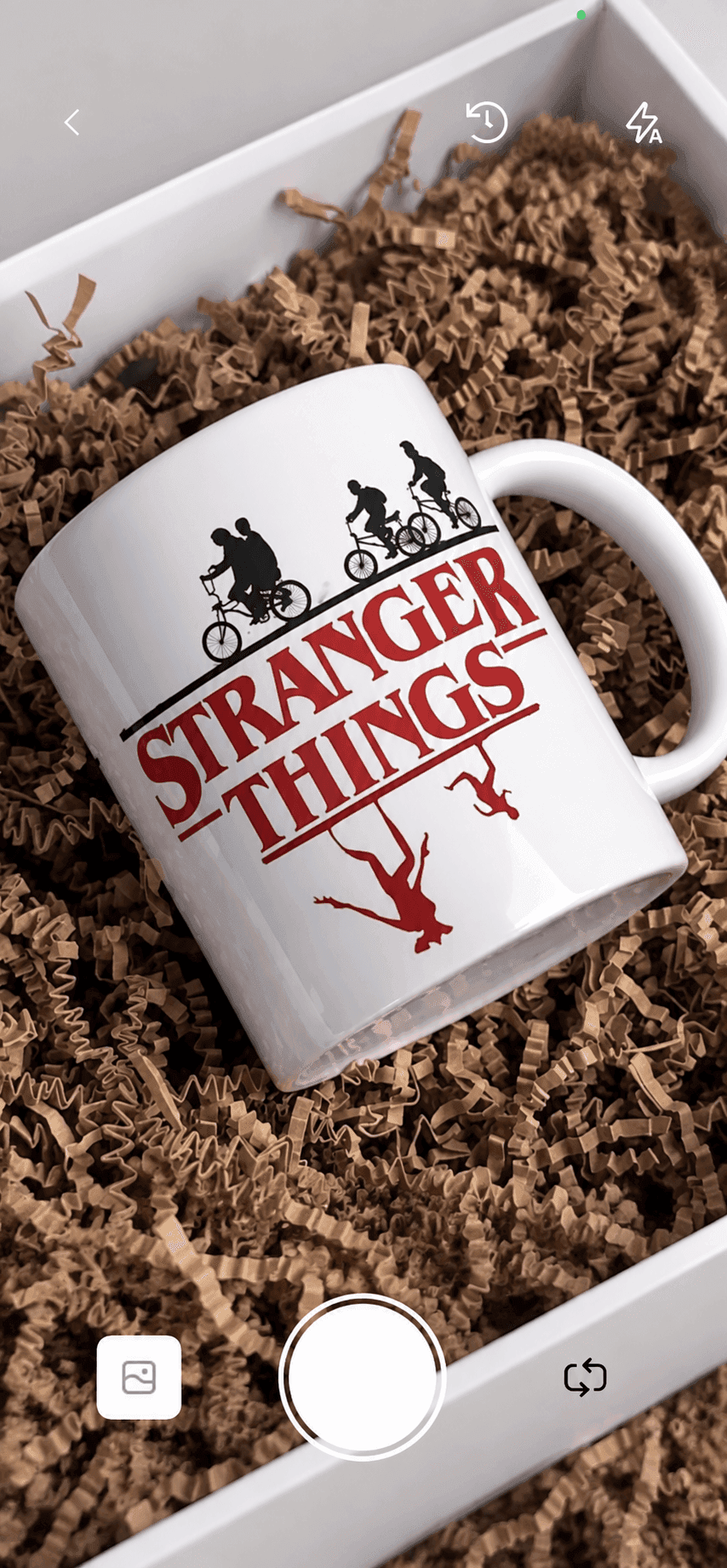
Take a picture of something in front of you, or choose an image from your camera roll. You can zoom or select a particular object to make your search more specific.
Step 4. Browse the Results
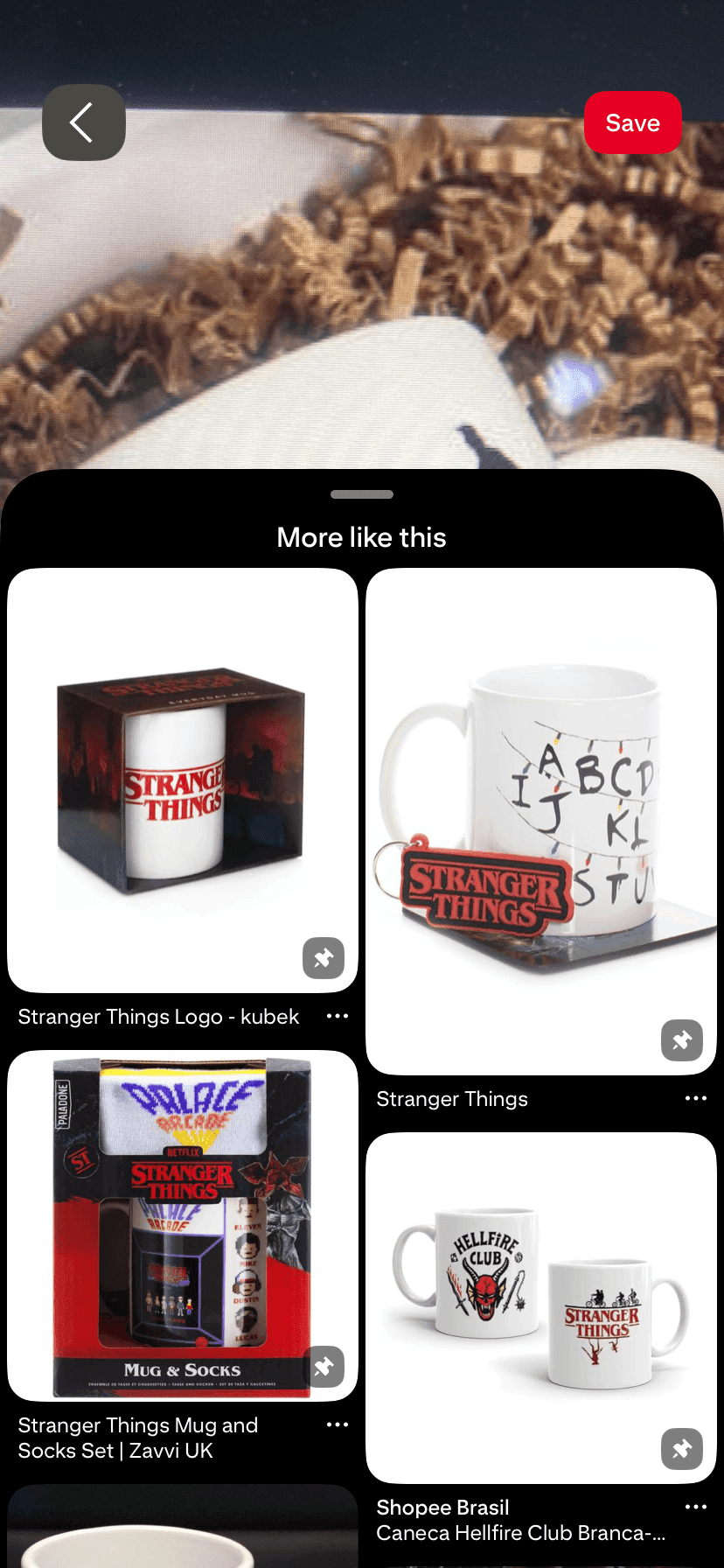
Pinterest will return similar images and Pins related to what it recognizes in your image.
Tip: Lens works particularly well when you know what something looks like but don't know the right words to search for it.
How to Search Beyond Pinterest With CopyChecker's AI Reverse Image Search
Pinterest is useful for visual discovery. But when you want to investigate where an image also appears outside Pinterest, CopyChecker's AI Reverse Image Search provides broader image-search capabilities.
It can return duplicate and visually similar images, along with source links from all over the public web and social media.
This gives you additional places to investigate rather than limiting your search to only related Pins.
Step 1: Upload the Image
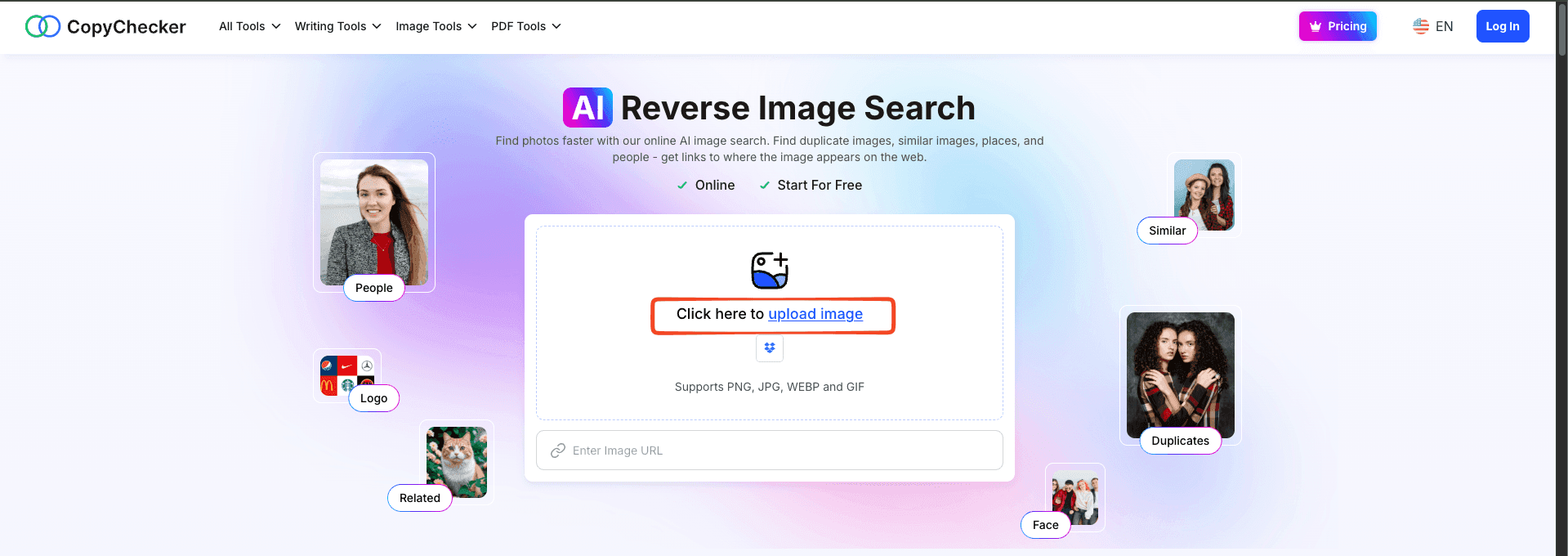
Save the image you want to investigate, take a screenshot if appropriate, or copy an image URL that you can use for the search. Then upload the image to start a search.
Step 2: Provide Necessary Consents
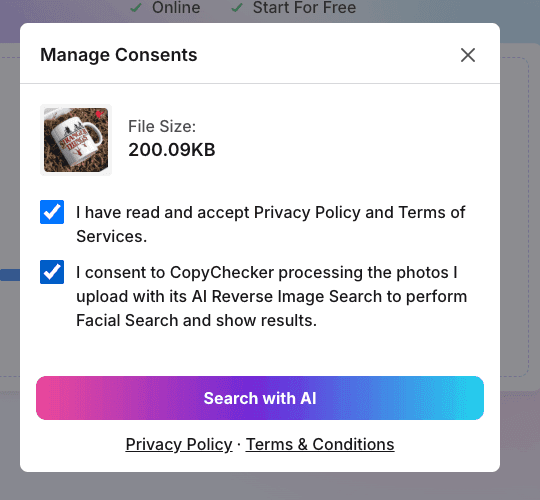
Click on the consent pop-up and confirm that you have read the terms and conditions and consent to CopyChecker processing your photo for an advanced reverse image search.
Step 3: Start the Search
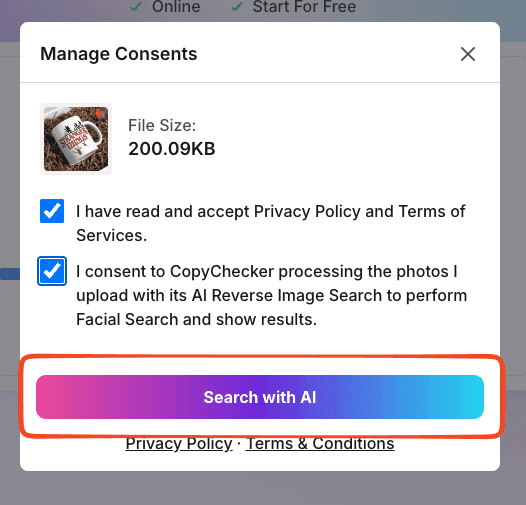
Click Search with AI and let the tool analyze the image and look for matching or visually similar results.
Step 4: Get Image Matches
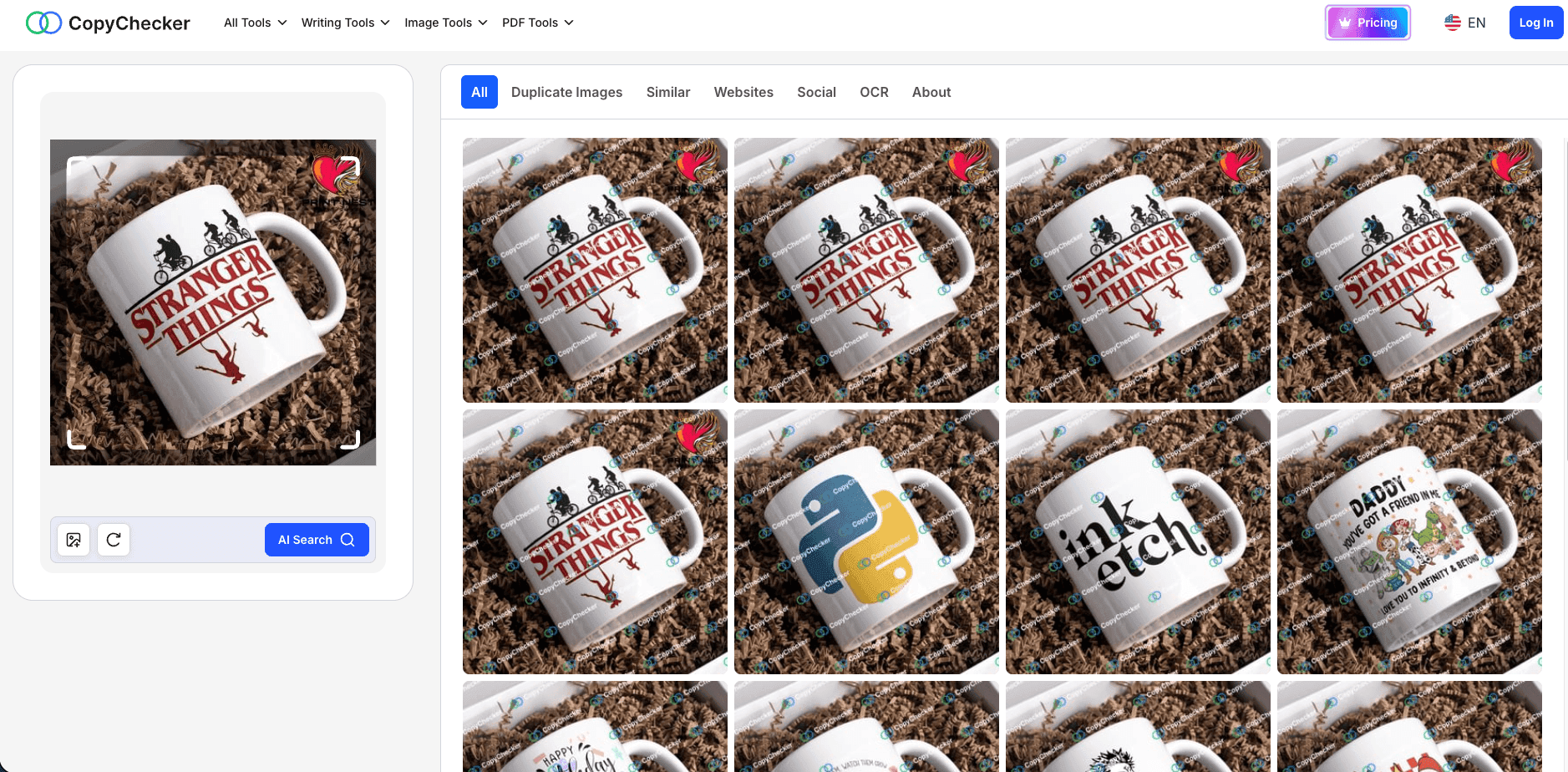
Once you click “Search with AI”, the tool will scour the internet and find similar, duplicate, and related images along with source links.
Duplicate images are identical matches to the one you searched for. Whereas similar images are altered or edited versions of the one you uploaded.
These results can help you investigate possible sources, find earlier appearances, or discover additional context around the image.
Step 5: Visit Source Link
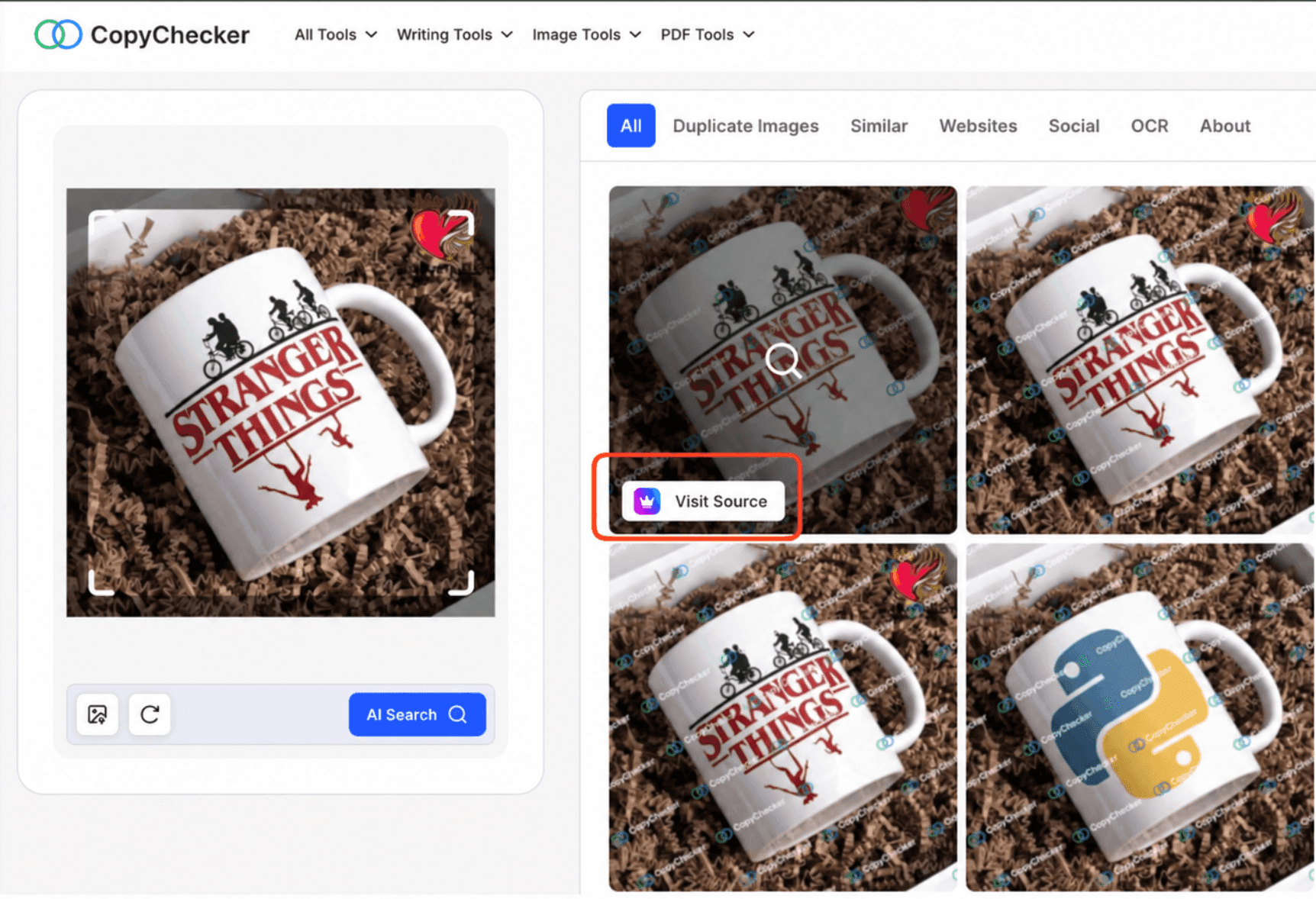
Click “Visit Source” to see where the images are from. A reverse image search result should still be treated as a starting point for verification, not automatic proof that the first result you see is the original creator or first publication.
Pinterest Visual Search vs. AI Reverse Image Search
Both are capable image search tools. The right option depends on what you're actually trying to accomplish.
| If You Want To... | Better Starting Point |
|---|---|
| Find similar Pins and ideas | Pinterest Visual Search |
| Search using something you see in real life | Pinterest Lens |
| Find similar fashion, decor, or products | |
| See where an image appears elsewhere online | AI Reverse Image Search |
| Investigate possible duplicate or reposted images | AI Reverse Image Search |
| Look for possible source pages | AI Reverse Image Search |
| Identify inspiration related to part of an image | Pinterest Visual Search |
You don't need to treat one as a replacement for the other.
Pinterest is designed primarily for visual discovery, while broader reverse image search is more useful when your question is about the image itself and where else it appears.
Benefits of Pinterest Reverse Image Search by Category
Pinterest's visual-search features become especially useful when text search is difficult. Instead of describing every detail, you can let the image guide the search.
Fashion
- Outfit Inspiration: Find visually similar outfits, accessories, shoes, and styling ideas.
- Trend Spotting: Explore related looks and discover different ways to style the same type of item.
- Product Discovery: Select a particular piece from an outfit to look for similar items.
Food & Recipes
- Culinary Inspiration: Use a food image to discover similar dishes and recipe ideas.
- Recipe Variations: Find different versions of a meal when you don't know its exact name.
- Healthy Choices: Explore visually similar meal ideas that fit the type of food you're looking for.
Home Decor
- Interior Inspiration: Select furniture, lighting, artwork, or another object to discover similar ideas.
- Style Discovery: Find related rooms and learn how different colors, textures, and materials work together.
- Product Ideas: Search individual objects within a room instead of trying to describe the entire space.
Travel
- Destination Inspiration: Explore visually related travel Pins based on places and scenery you like.
- Planning Ideas: Use travel images as starting points for finding attractions, accommodation styles, or itinerary inspiration.
A visually similar image alone does not necessarily identify an exact location, so verify important travel information separately before making plans.
Art
- Creative Inspiration: Explore similar artistic styles, techniques, subjects, and visual references.
- Discover Artists: Related images may help lead you toward artists and collections worth exploring.
- Trace a Work Further: If attribution is unclear, use broader reverse image search to investigate possible creators and earlier source pages.
- DIY Projects: Discover tutorials and craft ideas related to the artwork or style you searched.
If you plan to reuse or repost an image, CopyChecker's Image Copyright Checker can help you locate source pages and investigate the image's online usage.
Always check the actual license or obtain permission where necessary rather than assuming a search result alone makes an image free to use.
Health
- Fitness Inspiration: Explore visually related exercises, routines, or equipment.
- Food and Wellness Ideas: Find inspiration related to healthy meals and self-care.
- Motivation: Discover related visual content that fits your wellness interests.
For medical or health decisions, use reliable professional sources rather than relying on Pinterest images alone.
When Should You Use Pinterest and When Should You Search the Web?
Use Pinterest when you want to find similar Pins on the app. For example, you might want similar outfits, kitchens, paintings, recipes, wedding decorations, or travel inspiration.
Switch to a more powerful, broader reverse image search when you want to know where your image appears online. Pinterest helps you discover. Reverse image search helps you investigate.
Using both can be especially useful when you first discover something on Pinterest and then want to learn more about the image outside the platform.
Frequently Asked Questions
Can Pinterest find the original source of an image?
Pinterest may provide an external link associated with a Pin, but that doesn't necessarily mean the linked page is the image's original source.
Pinterest's visual-search tools are mainly designed to find visually related Pins, objects, and ideas. If you need to investigate possible original or earlier sources, use a broader reverse image search and compare the source pages you find.
Is Pinterest Visual Search the same as reverse image search?
Pinterest’s tool helps you discover visually related content on Pinterest. Broader reverse image search is generally used to locate matching or similar images across the internet.
Can I upload my own image to Pinterest and search with it?
Yes. Pinterest Lens lets you take a photo or select an image from your device to discover related ideas.
Can I reverse image search only part of a Pinterest image?
Yes. Pinterest's visual-search features let you focus on particular objects or portions of an image, which is useful when you only care about one item in a larger Pin.
Can reverse image search prove who originally created an image?
It can provide valuable evidence by showing source pages and where the image appears, but identifying the true creator may require comparing dates, checking author profiles, reviewing publication records, or confirming ownership directly.
Can I use a Pinterest image if I find its source?
Finding the source does not automatically give you permission to reuse an image. Check the image's license and the creator's usage terms.
Final Thoughts
Pinterest's visual search and Lens are excellent when you want to turn an image into more inspiration. They can help you find similar styles, related products, recipes, artwork, decor, and other Pins without knowing exactly what to type into the search bar.
But sometimes inspiration isn't the question.
If you need to investigate where an image also appears, whether it has been reposted, or which pages might help you trace its source, a broader reverse image search becomes more useful.
Start with Pinterest when you want to discover more of what you see. Use CopyChecker's AI Reverse Image Search when you want to investigate the image beyond Pinterest.