Just imagine that you're somewhere in the middle of writing something. Maybe a blog post, a business report, a proposal, maybe even just a long email. Then out of nowhere, you come across a source that says exactly what you've been trying to say.
The words are perfect. The idea lands just right. And then comes that familiar, nagging question: Can I use this? How do I use this without crossing a line?
That's where paraphrasing enters the picture. And honestly, it's one of those skills that almost everyone needs, but almost nobody is properly taught.
You've probably heard the advice "just put it in your own words" more times than you can count. But that phrase doesn't tell you how.
And when done carelessly, paraphrasing doesn't just fail to help; it actively makes things worse!
The truth is, sloppy paraphrasing is still plagiarism but a different type, just harder to spot at first glance.
So whether you're a blogger turning dense research into something readable, a content creator building credibility, a professional drafting a report, or simply someone who wants to use information responsibly, this guide is written for you.
We'll cover what paraphrasing actually is, how to do it right, what tools can and can't do for you, the myths that trip people up, and a full FAQ for everything else.
Let's get into it.
What Paraphrasing Actually Is and What It Isn't?
Let's get the most important thing out of the way first -
Swapping a few words is not paraphrasing.
It never was!
And yet that's exactly what most people do when they need to reword something quickly. Basically, they reach for a thesaurus, replace "use" with "utilize" and "important" with "crucial," and call it done.
The problem is that plagiarism checkers, editors, and professors see through this immediately, because the sentence structure, the logical flow, and the rhythm are all still someone else's.
Real paraphrasing is something different altogether. It means you've read the original, understood it thoroughly enough that it now lives in your head.
Finally, from that place of genuine comprehension, you've expressed the idea entirely in your own way. Different words, yes.
But also a different sentence structure, a different order of information, and quite often a slightly different angle on the same point.
The idea is yours to carry now; you just didn't generate it.
Think of it a bit like translation. A good translator doesn't go word by word; instead, they capture the spirit and meaning of a sentence and reconstruct it in another language.
Paraphrasing works exactly the same way.
To make that concrete, here's the same source sentence handled three different ways. The difference becomes obvious quickly:
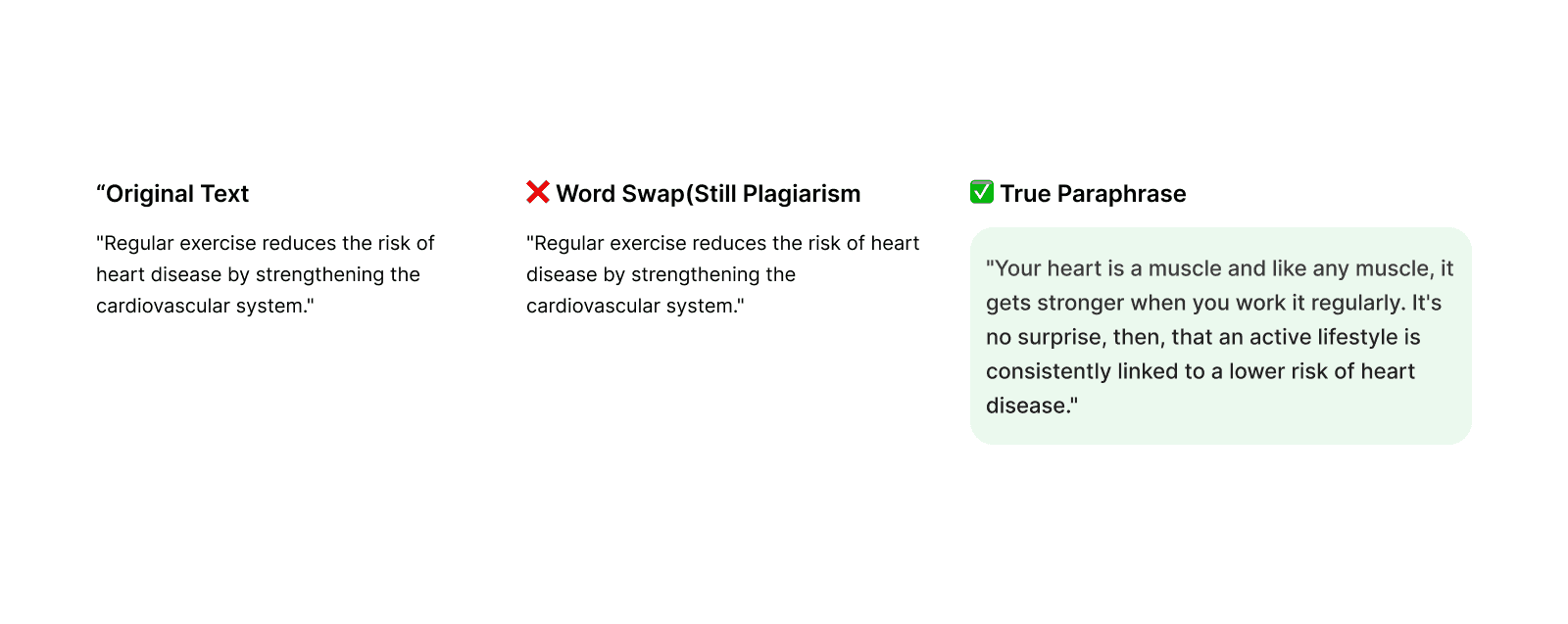
The true paraphrase takes a completely different path to arrive at the same destination.
That's how to paraphrase a paragraph without plagiarizing, where you basically restructure the whole thing, not just relabel the parts.
Common Myths About Paraphrasing You Need to Clear Up
There's a surprising amount of misinformation floating around about what counts as paraphrasing or maybe summarizing and what doesn't. Some of it comes from outdated advice, some from wishful thinking, and some just from genuine confusion.
Let's go through the ones that trip people up most often.
MYTH 1
“If I change enough words, I don't need to cite.”
The truth is, you might know how to cite properly, but this way you credit ideas, not just language. Even when every word in your paraphrase is original, the intellectual origin of the idea still belongs to the source. Mainly, attribution isn't just about copying but about honesty. You cite regardless of how thoroughly you rewrote the phrasing.
MYTH 2
“Putting text in quotation marks means I can use it however I like.”
Whereas quotation marks allow you to reproduce exact wording, but you still need attribution. Beyond that, over-relying on direct quotes is its own problem. In most writing contexts, paraphrasing is actually preferred because it shows you've understood and processed the material rather than just lifted it neatly.
MYTH 3
“Plagiarism detectors only catch word-for-word matches.”
The fact is that modern detection tools use semantic and structural analysis, not just string matching. They flag pattern similarity even when word-for-word overlap is low. Word-swapped paraphrasing is one of the patterns they're specifically trained to identify. It's not the safe workaround many people assume it is. That's why using a reliable word counter is what you need here.
Step-by-Step Guide on How to Paraphrase Without Plagiarism
Most people think paraphrasing is simple. Read something, reword it, done. But that's exactly where it goes wrong.
True paraphrasing isn't about changing words on the surface but about understanding an idea so well that you can explain it entirely in your own way, without leaning on the original at all.
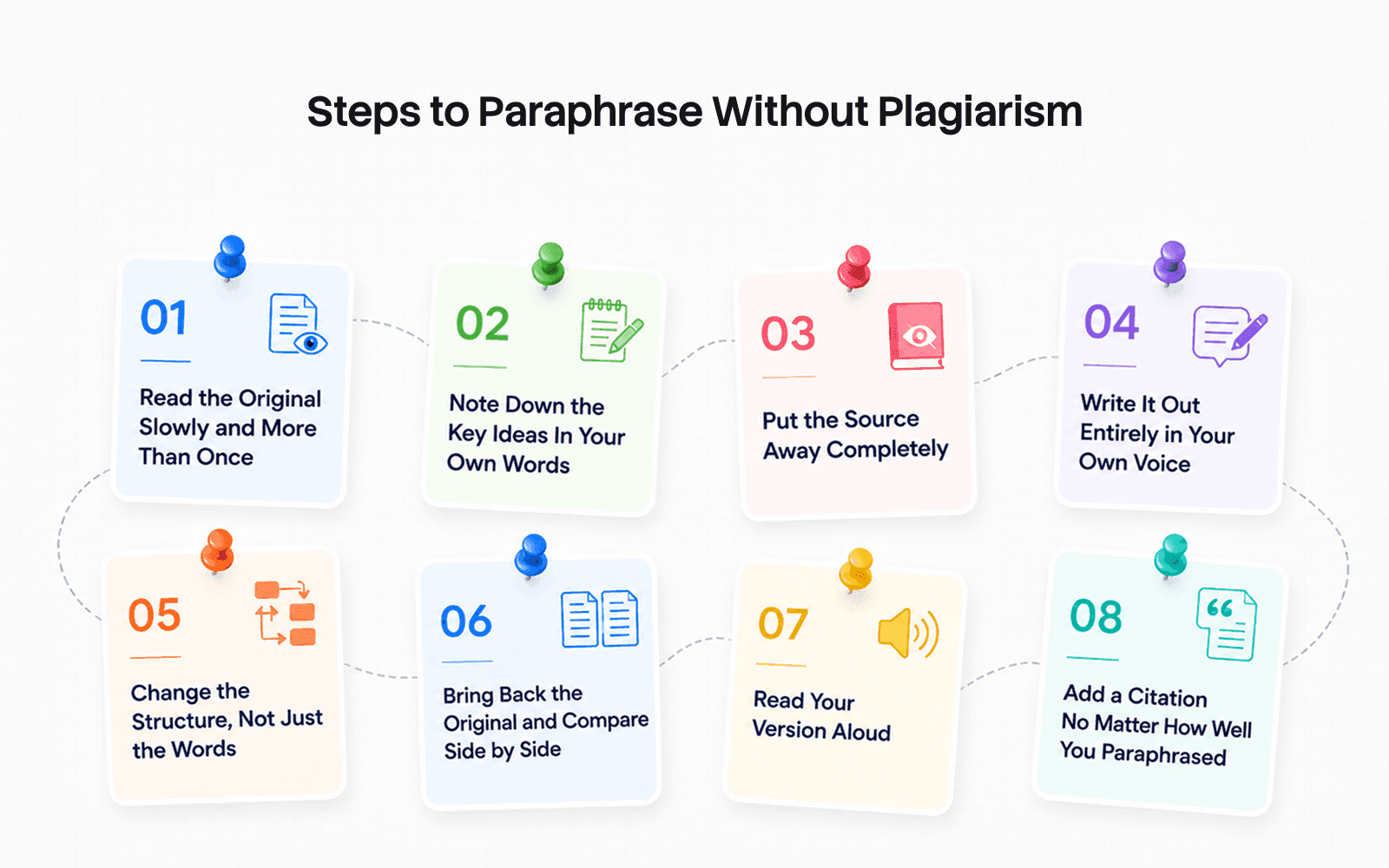
The good news?
Once you follow this process a few times, it becomes second nature. So, here's how it works, one step at a time.
Step 1: Read the Original Slowly and More Than Once
Before you touch your keyboard or pen, read the source properly. Not a quick skim. Actually read it. Then read it again. You're not looking for words to borrow but to understand what the writer is really saying.
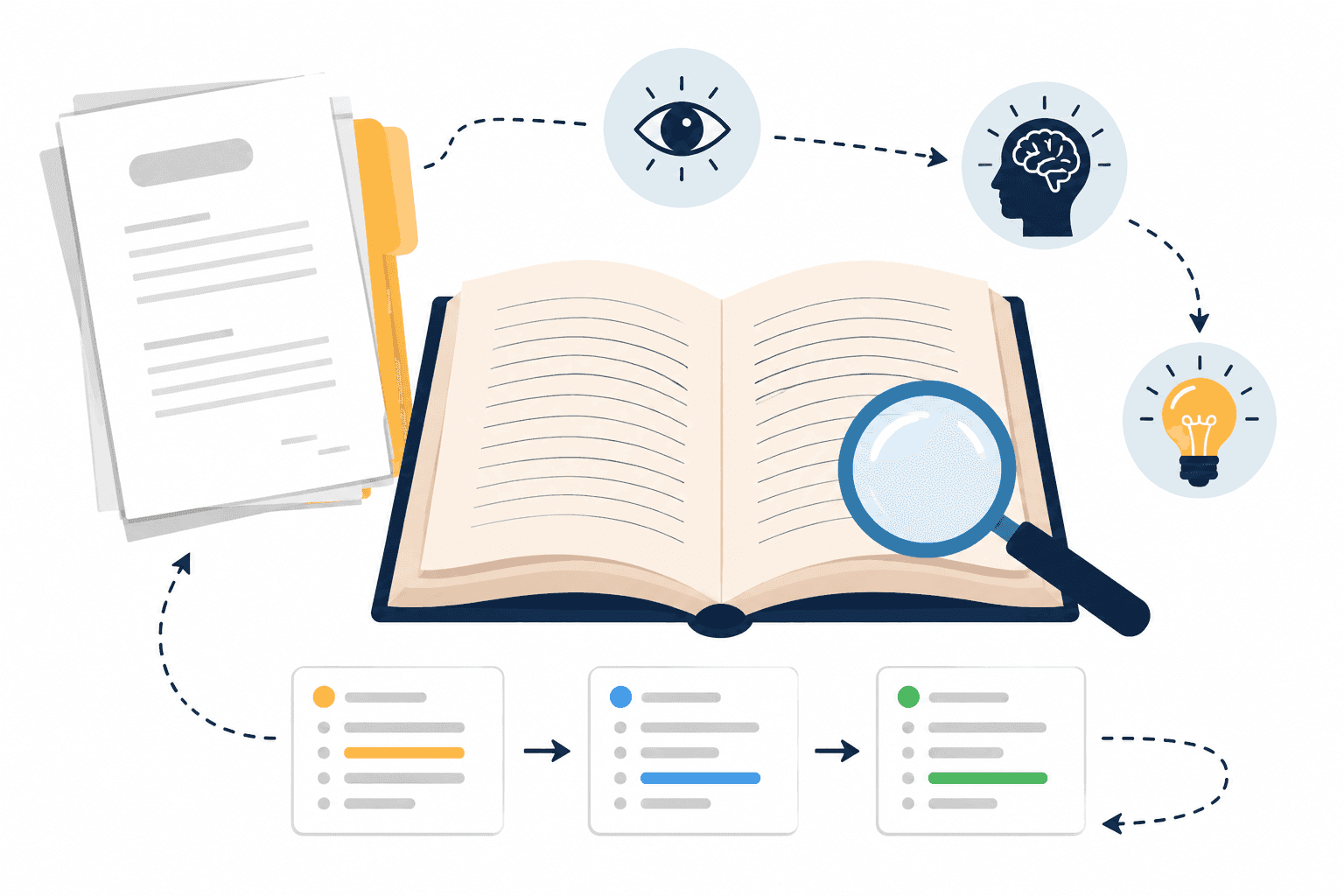
Ask yourself, what's the main point here? What's the supporting detail? What conclusion are they drawing?
If you move on before you truly grasp it, you'll end up stuck with the original phrasing because it's the only version of the idea you know. That's where accidental copying begins.
Step 2: Note Down the Key Ideas In Your Own Words
After reading, jot down the main ideas as short, rough notes using your own everyday words, not the source's.
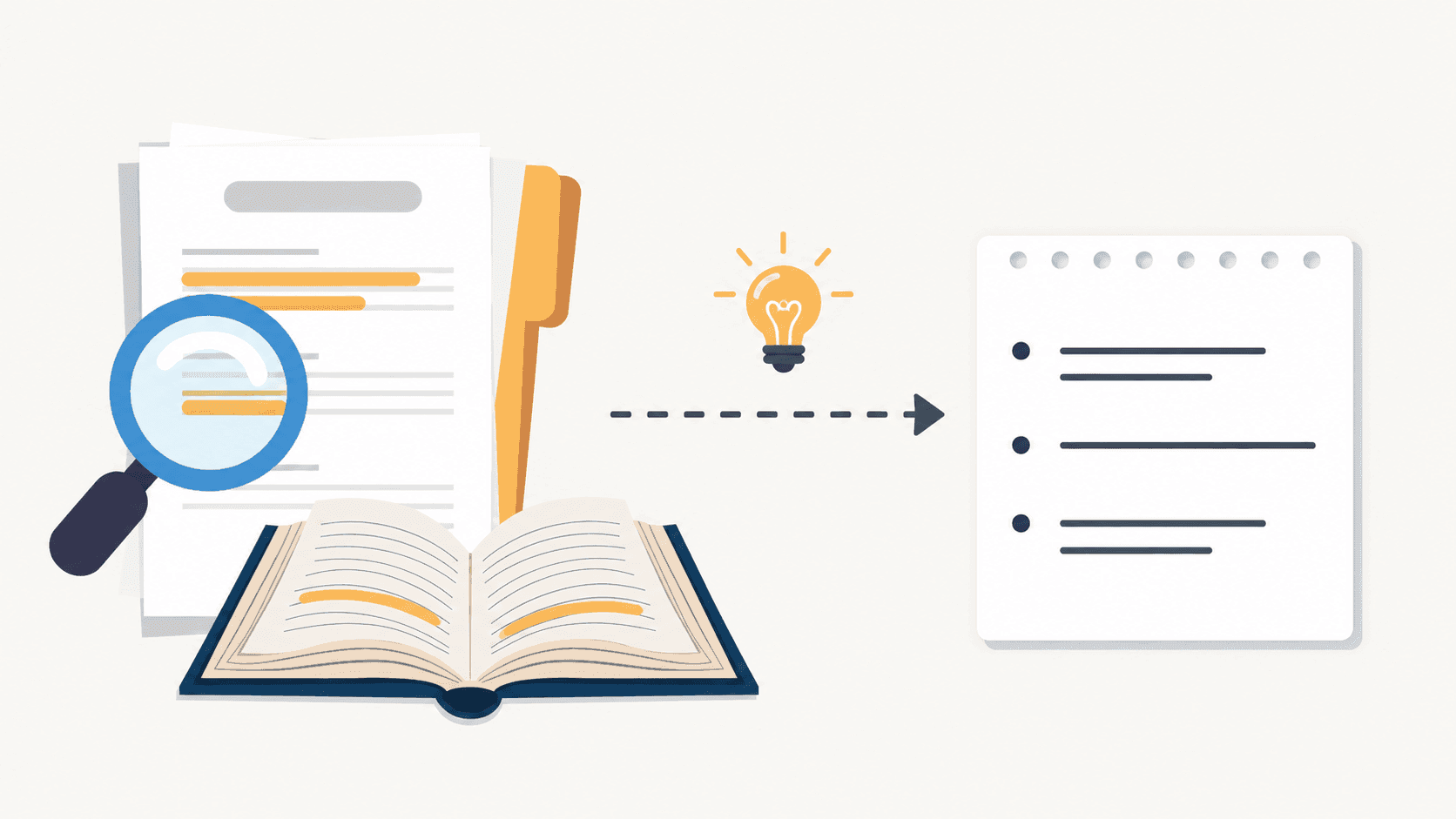
Don't copy sentences. Don't write full quotes. Just capture the meaning: what did this say, in plain terms? This step acts like a filter. It separates the idea from the original's language.
So when you write your full paraphrase, you're working from your understanding, not from borrowed phrasing you've half-memorized.
Step 3: Put the Source Away Completely
This is the step most people skip, and it's honestly the most important one. Once you've read and noted the key ideas, close the original. Shut the tab. Flip the page over. Get it out of your line of sight entirely.
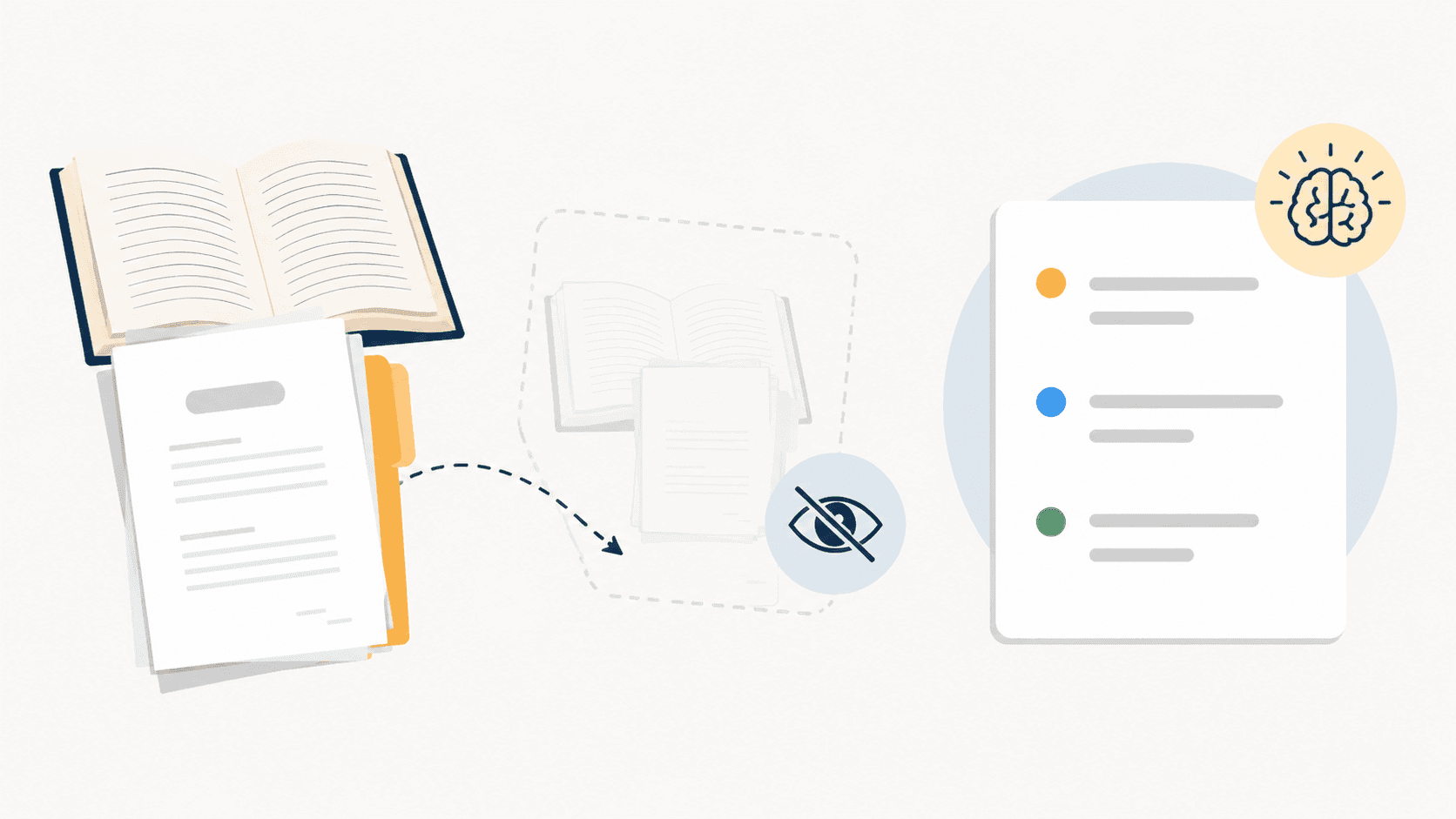
Why? Because as long as the original is in front of you, you will unconsciously copy it even if you're trying not to.
Your brain finds it easier to slightly adjust existing text than to create from scratch. Take that option away, and you're left with only your own words. That's exactly what you want.
Step 4: Write It Out Entirely in Your Own Voice
Now write using only your notes and your memory. Explain the idea the way you'd say it to a friend, a colleague, or a reader who's never seen the original.
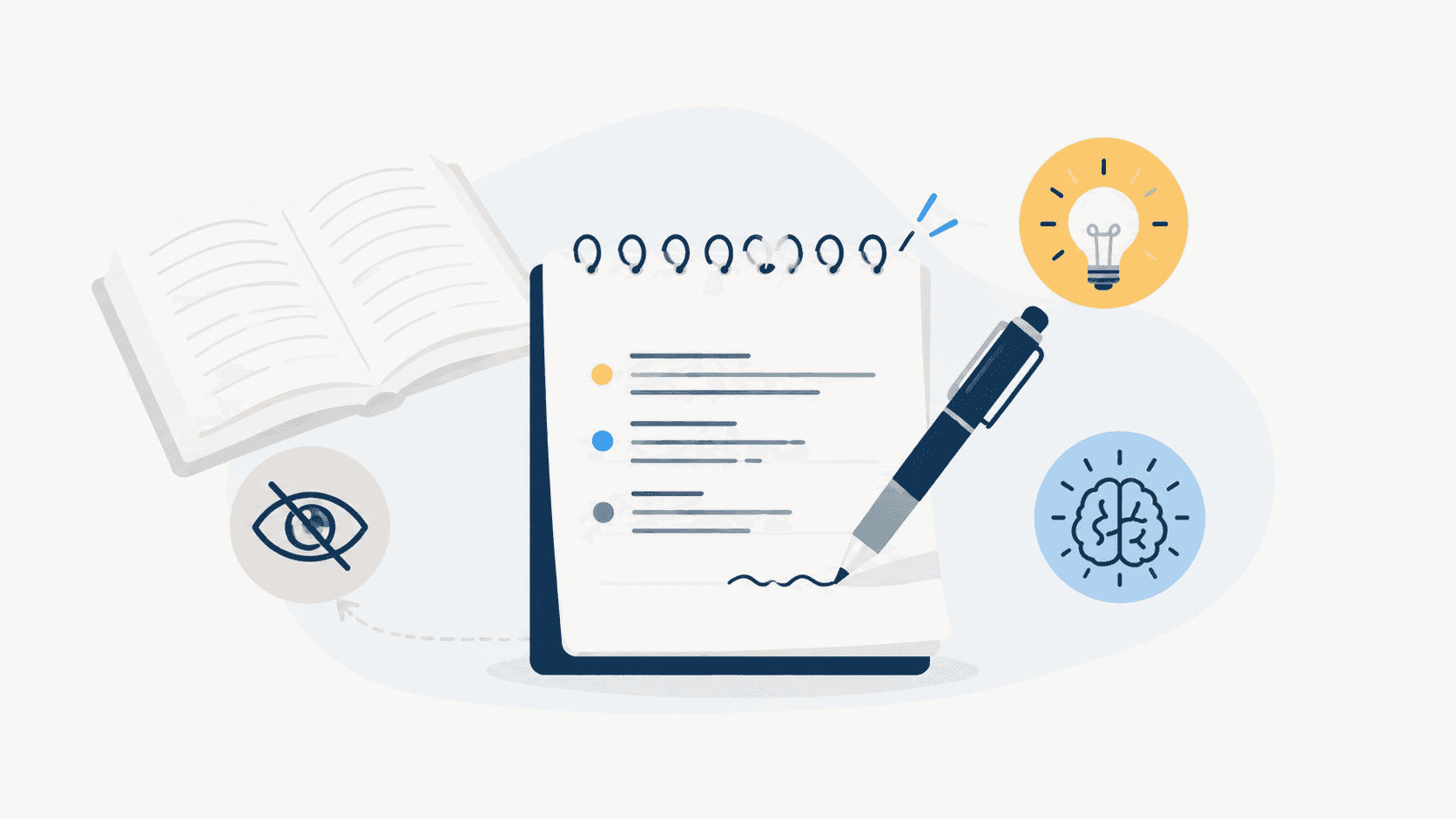
Don't worry about making it perfect yet. Don't worry about matching the style or formality of the source. Just get your understanding onto the page and make sure the content is readable in your own natural way. Short sentences are fine. A casual tone is fine.
Basically, the goal at this stage is genuine expression, not polish. You can tighten it up later, but you can't make borrowed language original, so it's far better to start fresh.
Step 5: Change the Structure, Not Just the Words
This is the step where many people stop too early. They change a few words and think they're done.
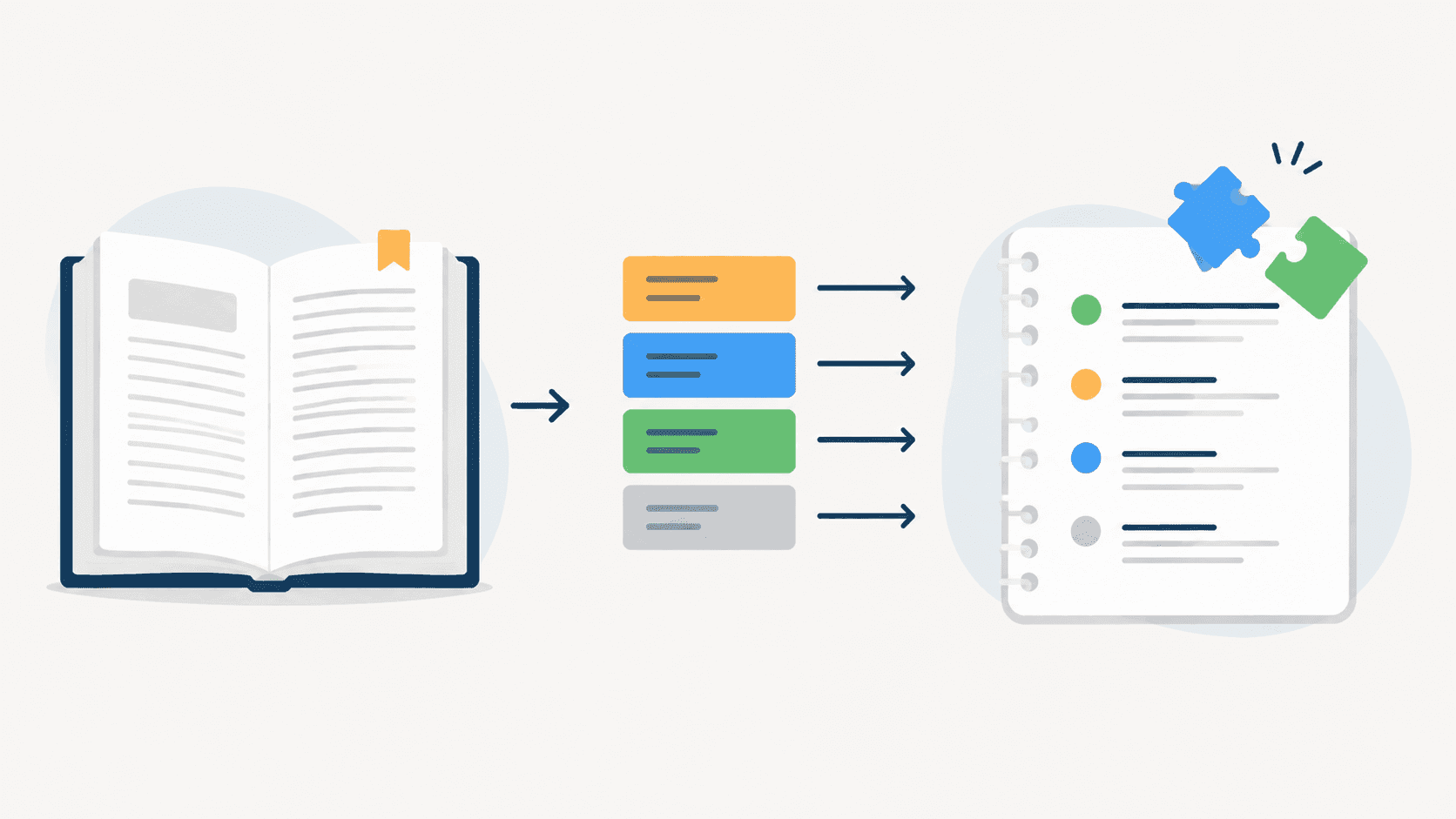
But if your sentence follows the exact same shape as the original with the same order, the same structure, and the same flow from point A to point B, then it's still too close, even if every individual word is different.
So look at your draft and ask: can I rearrange this? If the original explains the cause first and then the effect, try writing the effect first and then explaining why.
If it lists three things in a row, try using a different structure entirely, maybe one sentence leading into two supporting ones. Changing the idea's architecture is what makes a paraphrase truly yours.
Step 6: Bring Back the Original and Compare Side by Side
Now, and only now, look at the original again. Place your version next to it and compare them honestly. You're checking for three things:
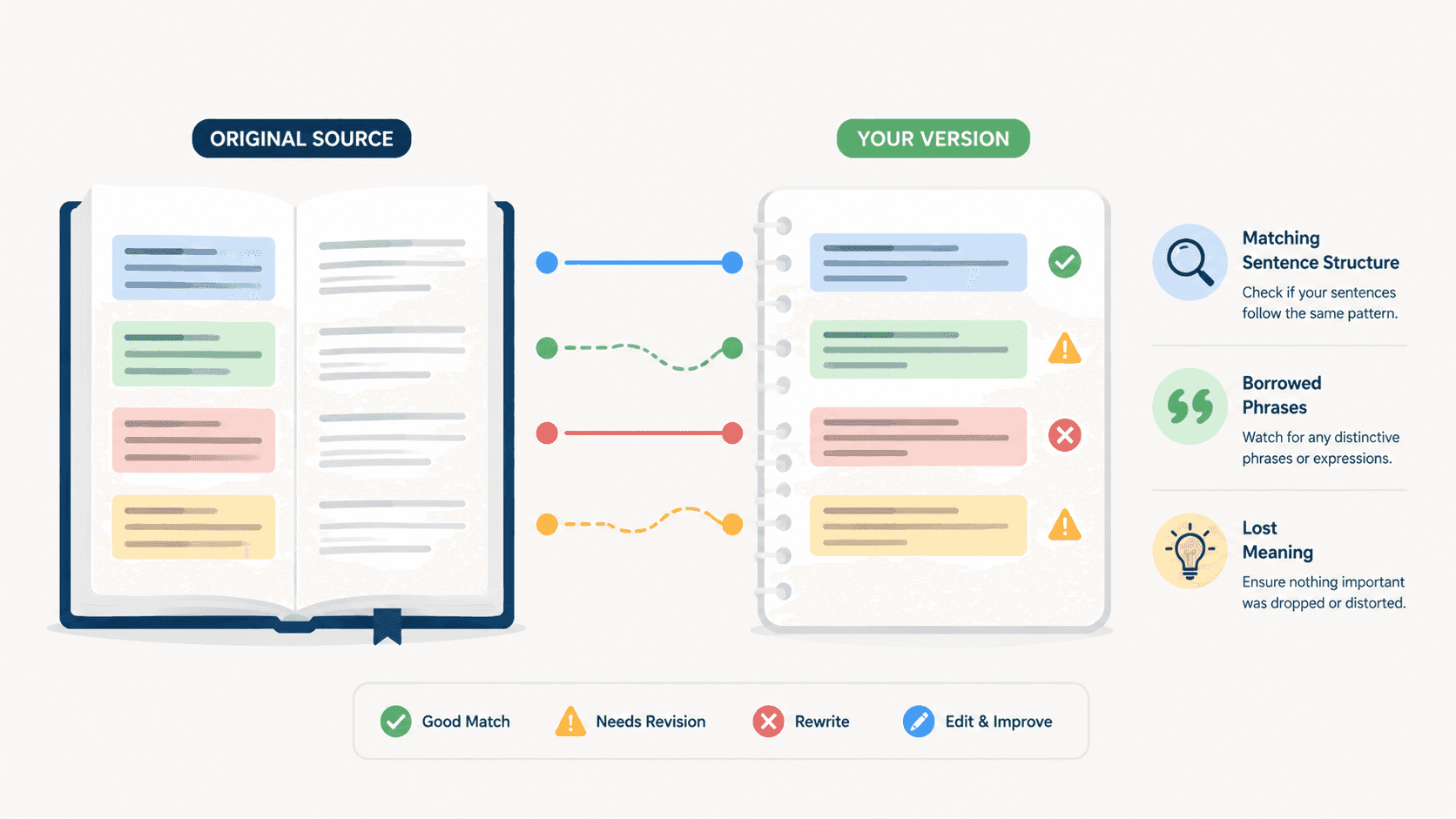
- Matching sentence structures. Do your sentences follow the same pattern as the original's, even with different words? If yes, rewrite those sentences.
- Borrowed phrases. Did any distinctive phrases or expressions from the source creep into your version without you noticing? If yes, reword them.
- Lost meaning. Did anything important get accidentally dropped or distorted in the process? If yes, add it back in your own words.
This comparison step is where good paraphrasing gets finished. Don't skip it.
Step 7: Read Your Version Aloud
Before you declare it done, read what you've written out loud. This sounds like a small thing, but it catches more problems than any other review method.
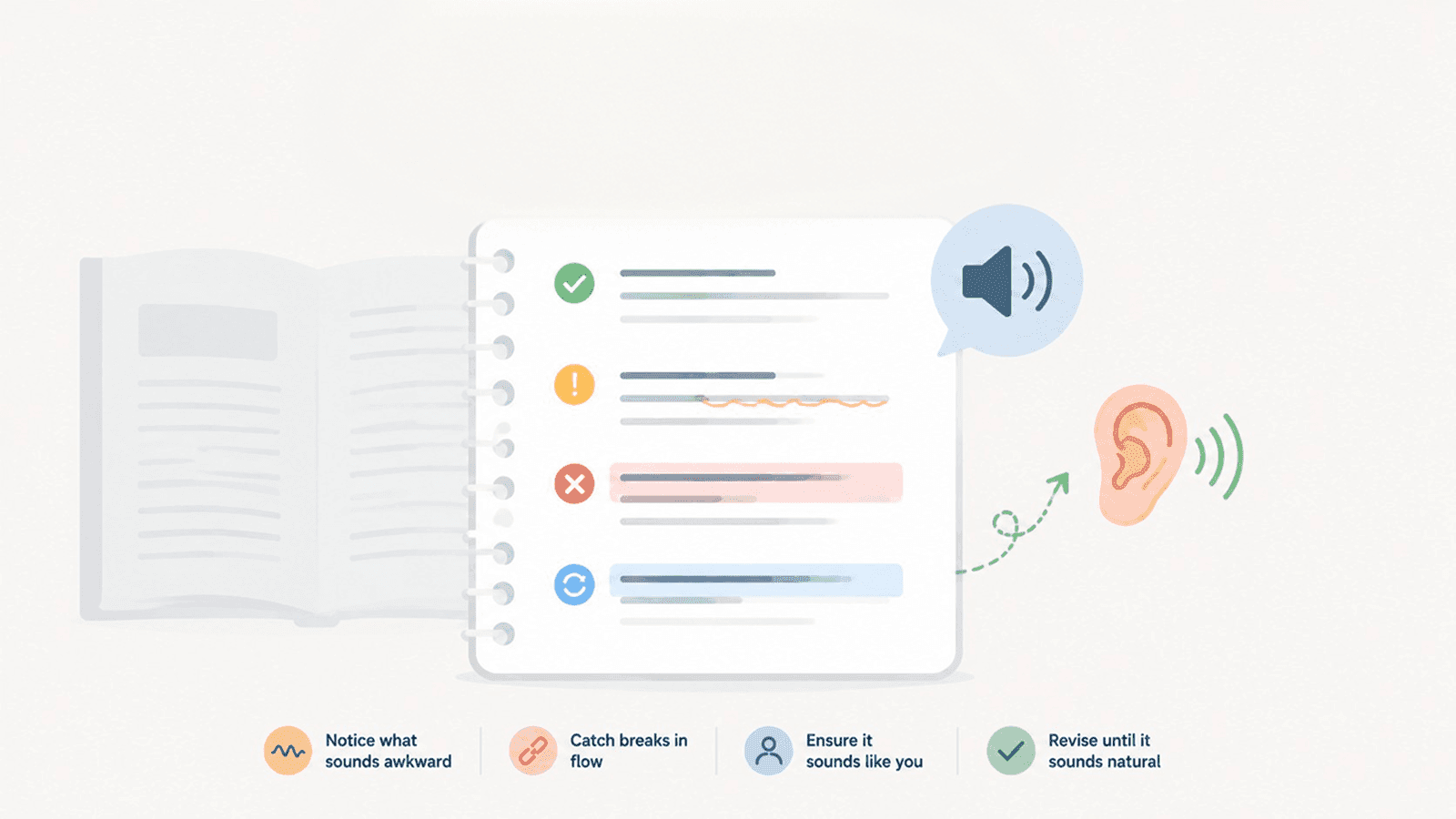
When you read aloud, you notice sentences that feel stiff or unnatural, usually because they're still carrying the shape of the original. If you think somehow sentences are getting repeated, then go for a strong sentence counter and remove them easily.
You also notice where the flow breaks, where something sounds forced, and where your voice disappears and someone else's sneaks in.
If it sounds like you're talking easily, clearly, and naturally, then you're in good shape. But if it sounds like you're reading off a formal document you didn't write, keep revising.
Step 8: Add a Citation No Matter How Well You Paraphrased
This last step surprises many people. Even if your paraphrase is completely original in language and structure, you still need to credit the source.
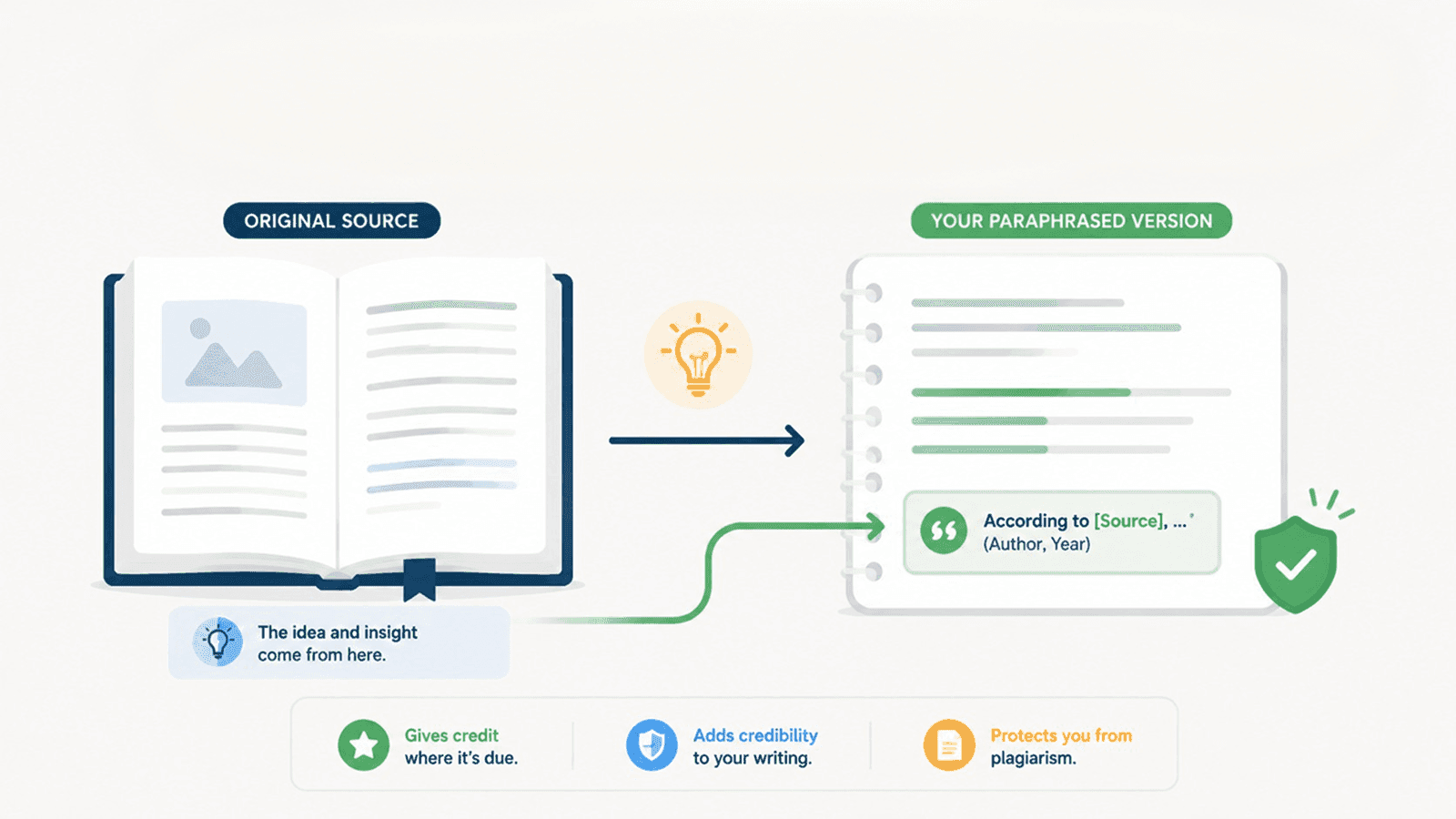
That's because a citation isn't about copying words but about giving credit for the idea.
The thinking, the research, the insight came from somewhere. The person who did that work deserves acknowledgment with proper citation with bibliography or reference section, regardless of how you expressed their findings.
A simple attribution like "According to [source]..." or a proper in-text citation is all it takes. It also adds credibility to your writing, because it shows the reader you're working from real sources, not making things up.
Skipping this step is what turns otherwise good paraphrasing into plagiarism. Even when the wording is entirely your own, the underlying idea still belongs to the original author. Make sure you cite the original source in the citation style required for your paper so readers can see where the information came from.
Your Pre-Publishing Checklist After Paraphrasing
Now that you already know how to paraphrase without plagiarism, let’s make things easier for you. So that you don’t have to waste any more time.
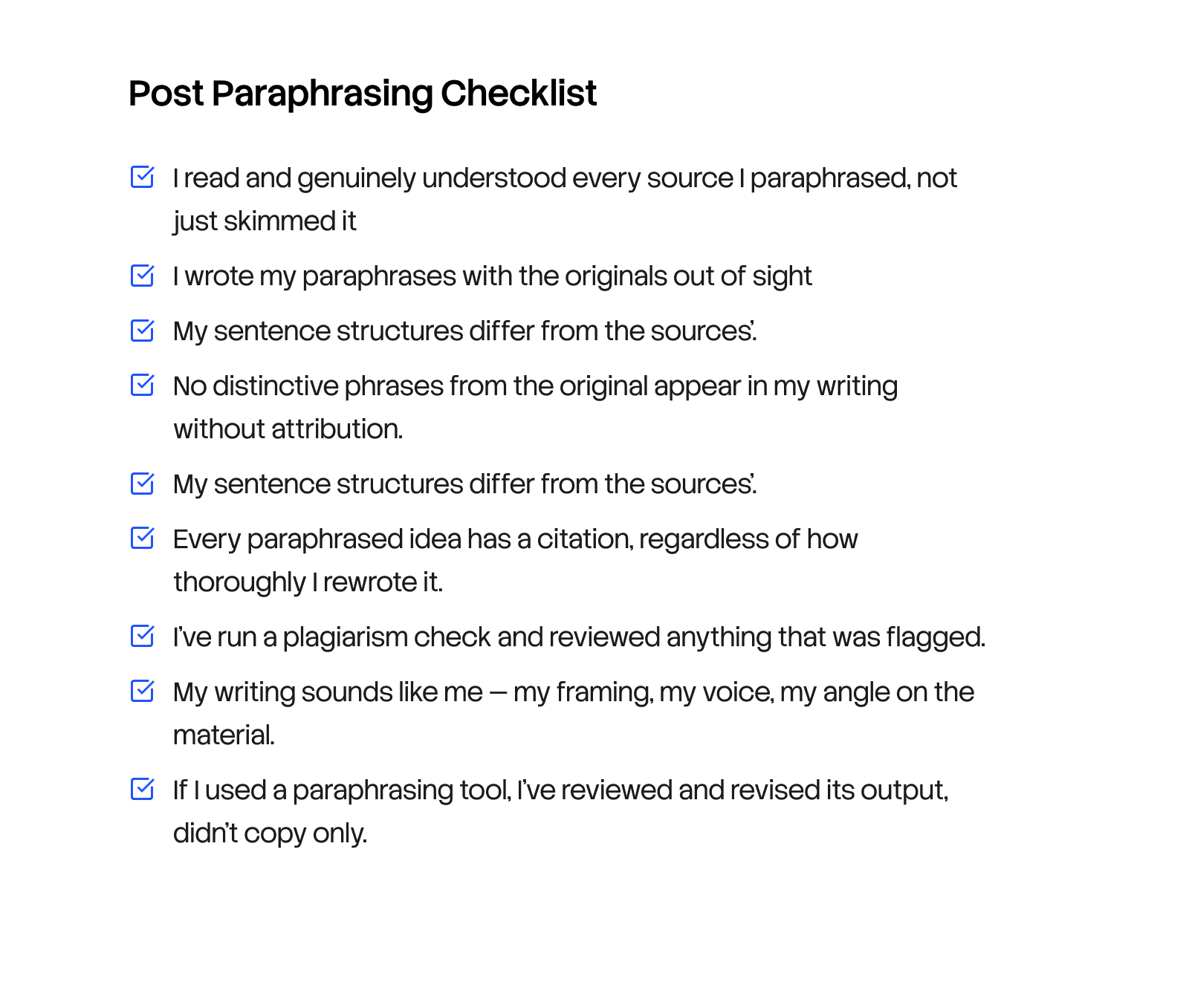
Before you publish, submit, or send anything that involves paraphrasing, run through this quickly. It takes about two minutes and can save you from a lot of unnecessary trouble.
Tick down each, and if you miss any of it, then resolve it as soon as possible -
FAQs about How to Paraphrase without Plagiarism
What’s the difference between paraphrasing and summarizing?
Paraphrasing rewrites the same idea in different words while keeping the original detail. Summarizing reduces longer content to its key points.
Do I always need to cite paraphrased content?
Yes. Even if you fully rewrite the text, the original idea still belongs to the source and should be credited.
Is paraphrasing from memory still plagiarism?
Writing from memory can help create more original wording, but you should still cite the source if the idea came from someone else.
Are free paraphrasing tools reliable for professional work?
They can help generate ideas or drafts, but the final content should always be reviewed manually for clarity and accuracy.
How can I tell if my paraphrase is original enough?
A good paraphrase should sound natural and reflect your own writing style. You can also verify it using the CopyChecker Plagiarism Checker.
Can paraphrasing tools bypass AI detection?
Not reliably. Most AI detectors can still identify heavily rewritten AI-generated content. It’s better to use tools as writing support rather than as replacements.
Is paraphrasing without citation plagiarism?
Yes. Rewriting someone else’s ideas without giving credit is still considered plagiarism.
Why is paraphrasing useful for bloggers and creators?
Paraphrasing helps creators explain information in their own voice while avoiding duplicate content and plagiarism issues.
What if I accidentally plagiarize?
Accidental or unintentional plagiarism can still cause problems. The safest approach is to cite sources properly and check your work with CopyChecker before publishing.
Wrapping It All Up for How to Paraphrase without Plagiarism
To sum up, learning how to paraphrase without plagiarism is really about understanding ideas deeply and expressing them naturally in your own voice.
Good paraphrasing mostly comes from reading carefully, thinking critically, and rewriting information in a way that feels clear, original, and genuinely yours.
The best writers, bloggers, students, and professionals constantly use outside sources. And what makes their work different is how they process those ideas and turn them into something meaningful for their own audience.
That’s the real goal, not simply creating content that avoids plagiarism flags, but creating content that adds value and reflects your own understanding.
So, before publishing or submitting your work, it’s always smart to double-check originality. In case you’re confused about which tool might help you out with paraphrasing, then put your worry aside.
As you can use the CopyChecker Plagiarism Checker without any hassle to scan your content for duplicate text. Moreover, you can ensure your paraphrasing stays unique and natural with the paraphrasing tool.
For more writing guides, paraphrasing tips, and content optimization tutorials, explore the CopyChecker Blog.
You may also like
- How to Cite a Website in APA Style the Right Way
- 5 PowerPoint Plagiarism Checker That You Need
- Best Free Plagiarism Checker for Research Papers
- 12 Best Free Plagiarism Checker Online Tools
- Plagiarism Checker Vs AI Detector - Know the Difference to Win